
AI-narrated version of this post using a synthetic voice. Great for accessibility or listening while busy.
Affiliate disclosure: PickinRocket participates in the Amazon Services LLC Associates Program. As an Amazon Associate we earn from qualifying purchases. Prices and availability are accurate at publish time but may change.
Every hunter who fills a tag eventually asks the same question: is a vacuum sealer actually worth the money, or is a stack of freezer bags and a good squeeze technique good enough? For a small amount of game, freezer bags genuinely are fine. Once you’re processing a whole deer, elk, or a good season of fish fillets, the math changes – freezer burn losses alone can eat through the cost difference within a season or two, and that’s before counting the time saved.
What Freezer Burn Actually Costs You
Freezer burn isn’t just a texture problem – it’s wasted meat, full stop. Ice crystals form when air trapped in a package lets moisture migrate to the surface, and once that happens, the affected meat needs to be trimmed away before cooking or it turns leathery and off-flavored. On a whole deer or elk broken down into a season’s worth of packages, losing even 5-10% of the total to trimmed freezer burn is a meaningful amount of meat – often more, in dollar terms, than the sealer itself cost. A proper vacuum seal removes essentially all the air, which is the direct cause of freezer burn, and extends usable freezer life from months to well over a year for most cuts.
Who Should Buy One, and Who Should Skip It
If you’re processing one or two fish trips’ worth of fillets a year, a good freezer bag with the air pressed out by hand is genuinely adequate – the loss from imperfect sealing on a small volume isn’t worth the cost of a machine. The calculation flips once you’re processing a full deer or elk, doing your own fish filleting through an entire season, or storing wild game alongside garden produce for freezing. At that volume, the time saved and meat preserved consistently pays for a mid-range sealer within one or two processing sessions.
Comparison: Vacuum Sealer Tiers
| Tier | Price range | Best for | Limitation |
|---|---|---|---|
| Entry-level handheld/compact | $50-$90 | Occasional small-batch sealing | Slower, smaller bag width, less suction power |
| Mid-range countertop | $100-$180 | Most home game processing | Not built for daily heavy commercial-style use |
| Premium countertop | $180-$300 | Large volume, frequent use, moist/liquid foods | Higher cost for capability casual users won’t need |
| Chamber vacuum sealer | $300-$600+ | Serious volume, liquids, marinades | Bulkier, higher upfront cost, overkill for most home use |
Don’t Forget Bag Costs in the Math
The sealer itself is only part of the ongoing cost – vacuum sealer bags, especially proprietary rolls versus generic-brand alternatives, add up over a season of processing a full animal. Buying bag rolls in bulk and cutting them to size is meaningfully cheaper per package than pre-cut bags, and most mid-range and premium sealers accept generic roll material rather than locking you into brand-specific bags. Factor this into the real cost comparison against freezer bags – a vacuum sealer bag costs more per package than a standard freezer bag, but the extended shelf life and reduced trim loss still comes out ahead for anyone processing real volume.
Wet Foods and Marinades: Where Cheaper Sealers Struggle
Ground meat, marinated cuts, and anything with real moisture content is where entry-level sealers show their limits – lower suction power struggles to pull a full seal before liquid gets drawn into the sealing strip, which can result in a weak or failed seal that ruins a bag mid-freezer-life. Mid-range and premium machines typically include a “moist” or “wet” mode that adjusts the seal timing and heat specifically for this, and it’s worth testing on a marinated cut before trusting a full batch to it. If a large share of what you’re sealing is ground meat or anything with real surface moisture, this feature alone can justify skipping the cheapest tier entirely.
Sous Vide as a Bonus Use Case
Beyond freezer storage, a vacuum sealer opens up sous vide cooking, which pairs unusually well with wild game – venison and other lean game meats are prone to overcooking with traditional methods, and precise low-temperature sous vide cooking is one of the more forgiving ways to cook them evenly without drying them out. This isn’t a reason to buy a sealer on its own, but it’s a genuine bonus use case worth knowing about if you already own an immersion circulator or are considering one – the same sealed bags used for freezer storage work directly in a sous vide bath.
Best Budget Pick: Entry-Level Sealer

- FoodSaver FM2000 Vacuum Sealer System with Starter Bag/Roll Set
- And a FoodSaver 8″ & 11″ Vacuum Heat-Seal Rolls Combo Pack (5 Count)
For someone processing a modest amount of fish or a partial share of a deer, an entry-level sealer handles the job without a major investment. It’s slower per bag than a mid-range machine and typically has less suction power, which matters more for liquid-heavy packages like ground meat with extra moisture, but for straightforward cuts and fillets it does what it needs to.
Best All-Around: Mid-Range Countertop Sealer
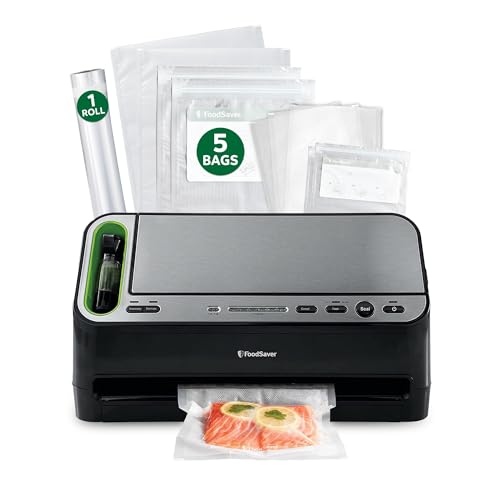
- SAVE MONEY AND SEAL FRESHNESS IN: MEAT PRESERVED WITH THE FOODSAVER SYSTEM IN THE FREEZER CAN LAST UP TO 3 YEARS AND STILL TAST…
- AUTOMATIC BAG DETECTION: AUTOMATIC BAG DETECTION MAKES VACUUM SEALING EASIER THAN EVER: SIMPLY PUT THE BAG IN THE VACUUM CHAMBE…
- SIMPLE TO USE: BUILT IN ROLL STORAGE AND CUTTER LETS YOU EASILY MAKE CUSTOM SIZED BAGS TO FIT WHATEVER YOU SEAL, WHILE LED LIGH…
This is the sensible default for most hunters and anglers processing a real volume of game across a season – enough suction power to handle typical cuts cleanly, a bag width that fits most standard packages, and a price that pays for itself quickly once you account for freezer burn losses avoided. It’s the tier most people should actually buy rather than either underspending or overspending.
Best for Heavy Use: Premium Countertop Sealer

- Dollar Saver: Preserve food up to 3 years in the freezer, maintaining its freshness and taste
- Bag Optimization: Minimizes bag waste with a built-in roll cutter for custom-sized bags
- Consistent Sealing: Dual heat sealing strips ensure optimal vacuum level and an airtight seal
For anyone processing multiple animals a season, doing serious volumes of fish, or regularly sealing liquid-heavy items like marinated cuts or soups, the extra suction power and moisture-handling features in this tier justify the added cost. It’s not necessary for occasional use, but for a household that fills the freezer every fall, it holds up to more frequent use without the motor working as hard.
Best for Serious Volume: Chamber Vacuum Sealer

- EASY-TO-USE CONTROL PANEL AND PRESSURE INDICATOR: Perfect vacuum and seal with minimal effort using one-touch controls on this…
- QUALITY AT HOME AND RELIABLE FOR YOUR BUSINESS: With its compact design, this chamber vacuum sealer is ideal for both home kitc…
- LEAK-PROOF DOUBLE SEAL PROTECTION: The VacMaster VP230 features a dependable double seal system that provides an extra layer of…
A chamber sealer works differently than the countertop bag-style machines above it – it vacuums the entire chamber rather than just the bag, which handles liquids and marinades without the mess a standard sealer struggles with, and it’s built for genuinely heavy, repeated use. This is a significant step up in both price and counter space, and it’s the right call specifically for households processing large amounts of game and fish every year, not for someone doing a single deer.
A Sealed Bag Is Still Useless If You Can’t Find It
A well-organized chest freezer full of properly sealed, clearly labeled cuts is dramatically more useful than the same meat sealed but unlabeled and stacked at random. Most vacuum sealers work fine with a permanent marker directly on the bag, but a simple system – cut, date, and animal or trip noted on every package before it goes in the freezer – pays off the following winter when you’re trying to plan meals around what’s actually on hand rather than guessing from a frozen, unmarked block.
Warranty and Replacement Parts Availability
Sealing strips, gaskets, and the foam drip tray on countertop sealers wear out well before the motor does on a machine that sees real seasonal use, and how easily those parts are replaced separately – rather than requiring a full replacement unit – is worth checking before buying. Established brands with a long product history tend to have better long-term parts availability than newer budget entrants, which matters most on a machine you’re planning to keep for several hunting seasons rather than replace every year or two. A one- or two-year warranty is standard across most of this category; anything shorter on a mid-range or premium model is worth treating as a minor red flag rather than dismissing outright.
The Honest Verdict
For anyone processing more than an occasional fish trip’s worth of meat, a vacuum sealer is worth it – the freezer burn losses it prevents on a full deer or elk season typically cover the cost of a mid-range machine within one or two processing sessions, and the time saved packaging a whole animal in one sitting is real. It’s not worth it for someone freezing a handful of fillets a year; a good freezer bag and careful air removal by hand covers that volume just fine. The mistake to avoid is buying at either extreme – an underpowered entry model that struggles with a full processing session, or a chamber sealer sized for a volume you’re not actually processing. When in doubt between two tiers, it’s generally the safer call to size up slightly rather than down – a sealer that’s occasionally more machine than you strictly need still gets used every season, while one that’s consistently overwhelmed by a real processing volume becomes a source of frustration that shortens its actual useful life. One last practical note: run a test seal on an empty bag before your first real processing session with any new machine, especially if it’s been sitting in a box since a holiday sale – it takes two minutes and confirms the seal is actually airtight before you commit a freezer’s worth of meat to bags you haven’t verified.
Home processing of wild game carries real food-safety responsibilities — proper temperatures, cleaning, and storage matter. Review current guidance at canada.ca food safety.
Related Auburn AI Products
Running an affiliate content site and want to scale? Auburn AI has kits for operators: