
AI-narrated version of this post using a synthetic voice. Great for accessibility or listening while busy.
Affiliate disclosure: PickinRocket participates in the Amazon Services LLC Associates Program. As an Amazon Associate we earn from qualifying purchases. Prices and availability are accurate at publish time but may change.
Grinding your own game meat comes down to a straightforward trade: pay a processor a per-pound fee every season, or pay once for a grinder and do it yourself from then on. For a single deer, the math is close. For anyone filling multiple tags, processing elk or moose, or wanting control over fat ratio and which cuts go into the grind, an electric grinder usually wins that trade within a season or two – but only if you’re actually going to use it regularly, not let it sit in a cupboard.
The Real Cost Comparison
Custom processing typically charges a per-pound fee for grinding alone, on top of any base processing fee for breaking down the animal. On a deer yielding a meaningful portion of its weight as ground meat, that adds up to a real dollar figure every single season. A mid-range electric grinder pays for itself against that fee within one to two seasons for most hunters, and after that, every pound ground is essentially free labor rather than a paid service. The tradeoff is time and cleanup – grinding, stuffing sausage if you go that route, and thoroughly cleaning a grinder afterward is real work that a processor otherwise handles for you.
Who Should Buy One, and Who’s Better Off Paying a Processor
If you fill one tag most seasons and don’t especially enjoy the processing side of hunting, paying a processor for grinding remains a completely reasonable choice – the time saved has real value, and a single season’s grinding fee is unlikely to justify the cost and storage space of a dedicated machine. The calculation shifts for anyone processing multiple animals, wanting to control fat content and blend ratios precisely (which most processors don’t customize per customer), or planning to make sausage, where controlling the exact grind and fat percentage matters for the final product.
Comparison: Grinder Tiers
| Tier | Price range | Motor size | Best for | Limitation |
|---|---|---|---|---|
| Entry-level electric | $60-$120 | 1/4-1/3 HP | Occasional small-batch grinding | Motor strain on larger batches or connective tissue-heavy cuts |
| Mid-range electric | $150-$300 | 1/2-3/4 HP | Most home game processing, one animal per season | Not built for back-to-back large batches without cooldown |
| Heavy-duty electric | $300-$600 | 3/4-1.5 HP | Multiple animals, sausage-making, frequent use | Higher upfront cost, more counter/storage space |
| Manual hand-crank | $20-$50 | N/A | Very occasional, small-volume use | Slow and physically demanding for real volume |
Cleaning and Food Safety Aren’t Optional Steps
An electric grinder has more parts and crevices than a knife and cutting board, and every one of them needs to be fully disassembled, cleaned, and dried after each use – ground meat’s increased surface area makes it more susceptible to bacterial growth than a whole cut, which makes thorough cleaning a food safety requirement, not a nice-to-have. Budget the extra fifteen to twenty minutes of cleanup time into your real assessment of whether a grinder saves you time overall, and consider whether the model you’re buying disassembles easily enough that you’ll actually do it properly every time rather than cutting corners.
Attachments Change the Value Equation
Many electric grinders accept sausage stuffing tubes and additional grinding plates as add-ons, which extends the machine’s usefulness well beyond plain ground meat into snack sticks, sausage, and jerky-adjacent products. If sausage-making is part of why you’re considering a grinder, check that your chosen model supports stuffing attachments before buying – retrofitting a grinder not designed for it is a common source of buyer’s regret.
Grind Size and Multiple Plates
Most grinders ship with at least one plate size, and buying a model that includes or supports both coarse and fine plates opens up more of what you can actually make. A coarse grind suits chili and taco meat; a finer grind suits burgers and meatloaf-style dishes; sausage-making typically wants something in between depending on the style. If your grinder only came with one plate, additional plates are usually available separately and are worth the modest cost if you’re making more than one style of ground product – grinding everything through a single plate size limits texture options unnecessarily.
Cold Meat and Partial Freezing: The Trick Nobody Tells You
Meat that’s too warm smears through a grinder instead of cutting cleanly, which produces a mushy, poorly textured grind and puts extra strain on the motor. Partially freezing meat for 30-45 minutes before grinding, firm but not solid, makes a genuinely noticeable difference in grind texture and reduces motor strain regardless of which tier of grinder you own. This matters more on a home setup than it does at a commercial processor, since a home kitchen doesn’t have the walk-in cooler keeping everything at an ideal working temperature throughout a long processing session.
Best Budget Pick: Entry-Level Electric Grinder
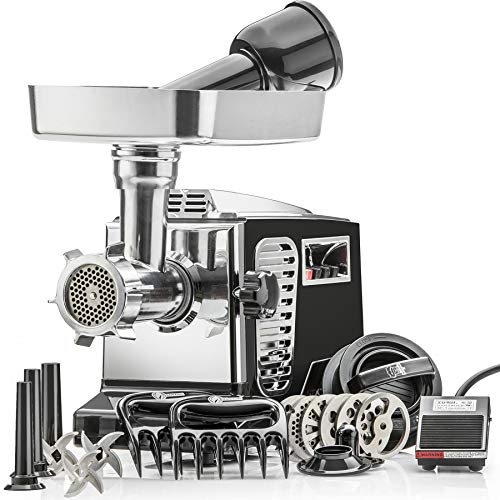
- The STX International Turboforce II (Patented Air Cooled) Complete Home Grinding Package features a Heavy Duty 2000 Maximum Wat…
- The Patented Quad Air Induction Cooling System Features a Locked Motor Wattage of 2000 Watts and a Circuit Breaker for Safety….
- Combining the Meat Auger with AVI (Advanced Variable Intake) Technology and the High Volume Feeder Tray which easily allows for…
For someone grinding a modest portion of a single deer, an entry-level electric grinder is a real step up from hand-cranking without a major investment. The smaller motor means working in smaller batches and giving it occasional rest to avoid overheating, but for the volume most single-tag hunters process, that’s a manageable tradeoff rather than a dealbreaker.
Best All-Around: Mid-Range Electric Grinder

- Commercial-Quality Meat Grinder for Home Kitchens: Stainless steel build and a powerful 0.5 HP motor deliver pro-level grinding…
- Versatile, Quiet, Built to Last: This electric grinder processes about 7 lbs of meat per minute for burgers, sausage, pet food,…
- Full Setup & Easy to Clean: Includes three plates, knife, stomper, and stuffing tubes for sausage making. Permanently lubricate…
This tier handles a full deer’s worth of grinding in a single processing session without the motor strain an entry-level unit faces, and it’s the sensible default for most hunters processing one animal a season. It’s powerful enough for occasional sausage-making too, without the price and footprint of a heavy-duty commercial-style machine most home processors don’t actually need.
Best for Heavy Use: Commercial-Style Electric Grinder

- Commercial-Quality Meat Grinder for Home Kitchens: Stainless steel build and a powerful 1.5 HP motor deliver pro-level grinding…
- Heavy-Duty Performance: Electric grinder handles beef, pork, poultry, lamb, venison, and raw chicken bones. This machine proces…
- Full Setup & Easy to Clean: Includes three plates, knife, stomper, and stuffing tubes for sausage making. Permanently lubricate…
For anyone processing multiple animals a season, or making sausage regularly enough that motor reliability under sustained use matters, the extra power and duty-cycle rating in this tier is worth the added cost and counter space. It’s genuinely overkill for a single deer processed once a year, and genuinely worth it for a household grinding several hundred pounds across a season.
The Manual Alternative
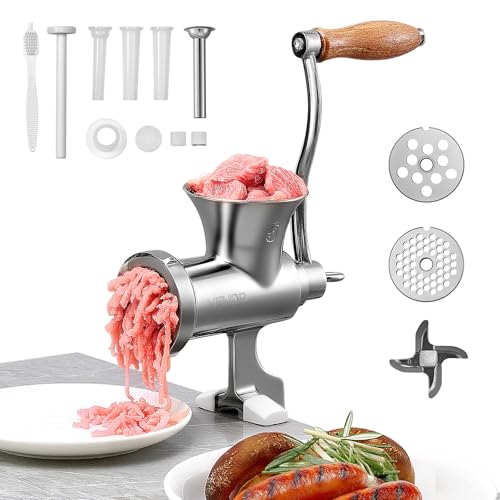
- Durable 304 Stainless Steel: Made from premium 304 stainless steel, this manual meat grinder is resistant to rust and oxidation…
- Versatile Cooking Companion: Grind beef, pork, chicken, fish, small bones, veggies, and chili peppers. Perfect for family meals…
- Stable Hand Operation: Equipped with a steel table clamp and non-slip pads, this hand-operated meat grinder stays firmly in pla…
A manual hand-crank grinder is the lowest-cost entry into grinding your own meat, and it remains a reasonable choice for very small, occasional batches where the physical effort isn’t a real barrier. For anything beyond a few pounds at a time, though, the labor involved adds up fast, and most people who start with a manual grinder upgrade to electric within a season or two once they’ve felt the difference in a real processing session.
Noise, Counter Space, and Where It’ll Actually Live
An electric grinder is loud enough that running it in a shared kitchen during a family dinner isn’t realistic, and larger units take up meaningful counter or storage space between uses – factors that matter more once the machine is actually sitting in your kitchen than they seemed to while comparing spec sheets online. A garage, basement processing area, or dedicated game room solves both problems at once if you have the space, and it’s worth thinking through where this machine will actually live and get used before buying, especially at the heavier-duty end of this list where the unit itself is genuinely bulky. A grinder stored inconveniently, even a good one, tends to get used less than one that’s easy to pull out and put away.
The Honest Verdict
For hunters processing more than one animal a season, or anyone who wants control over fat ratio and cut selection that a flat-fee processor typically doesn’t offer, an electric grinder is worth it – it pays for itself against processing fees within a season or two and adds a genuinely useful capability that paying a processor doesn’t provide. For a single-tag hunter who processes occasionally and doesn’t mind paying someone else for the labor, sticking with a processor remains a completely reasonable, lower-hassle choice. The mistake to avoid is buying a machine sized for volume you won’t actually process – an entry-level unit is plenty for one deer, and a heavy-duty commercial-style grinder is wasted money for anyone not processing multiple animals a year. If you’re genuinely unsure which category you’ll fall into after a first season, buying at the mid-range tier rather than the cheapest option is the safer hedge – it has enough headroom to handle a bigger year than expected without the cost and footprint of a machine built for volume most home processors never actually reach. Whatever tier you land on, do a small test batch the first time out before committing a whole animal’s worth of meat to it – confirming plate fit, motor behavior under real load, and your own cleanup routine on a few pounds first avoids finding a problem partway through processing something you can’t easily undo.
Home processing of wild game carries real food-safety responsibilities — proper temperatures, cleaning, and storage matter. Review current guidance at canada.ca food safety.
Related Auburn AI Products
Running an affiliate content site and want to scale? Auburn AI has kits for operators: