
AI-narrated version of this post using a synthetic voice. Great for accessibility or listening while busy.
Affiliate disclosure: PickinRocket participates in the Amazon Services LLC Associates Program. As an Amazon Associate we earn from qualifying purchases. Prices and availability are accurate at publish time but may change.
A compound bow is a more personal purchase than almost anything else on a hunter’s gear list – draw length, draw weight, and let-off all need to match your body and your hunting style specifically, which is why buying one sight-unseen is riskier than buying a scope or a pack. This guide covers the tiers worth knowing before you shop, what actually changes as price goes up, and where beginners tend to overspend or underspend.
Bowhunting in Alberta requires the applicable hunter certification, a valid licence, and the appropriate WMU tag or draw allocation. This article covers equipment buying decisions only – it is not instruction on shot placement or harvesting an animal.
Who Should Buy New, and Who’s Fine with a Package Bow
A first-time bowhunter figuring out whether the sport is for them doesn’t need to spend at the top of the market – an adjustable package bow that grows with their draw length and weight as they build strength and experience covers the first couple of seasons completely. Where it makes sense to spend more is once you know your exact draw specs, have a season or two of practice behind you, and want the smoothness, speed, and shootability that separates a genuinely good bow from an adequate one. Spending premium money before you know your own draw length and preferred setup is the most common overspend in this category.
Comparison: Compound Bow Tiers
| Tier | Price range | Draw weight range | Best for | Tradeoff |
|---|---|---|---|---|
| Youth/beginner package | $150-$300 | 10-50 lbs adjustable | New bowhunters, youth hunters, growing into the sport | Less refined shot feel, fewer accessory options |
| Value adult package | $250-$450 | 40-70 lbs adjustable | Most first “real” hunting bows | Not built for competitive-level tuning |
| Mid-range | $400-$700 | 40-70 lbs, narrower adjustment | Hunters who know their specs and want better performance | Smaller adjustment range once purchased |
| Premium | $700-$1,200+ | Fixed or narrow-range, precision-tuned | Experienced bowhunters, dedicated setups | Cost doesn’t translate to better hunting results for beginners |
Draw Length and Weight: Get This Right Before Anything Else
No bow on this list performs well if it’s set up wrong for your body. Draw length should be measured properly – a bow shop or archery pro shop will do this in a couple of minutes, and guessing based on height alone is a common mistake that leads to inconsistent form no matter how good the bow is. Draw weight should be enough to ensure legal and ethical kinetic energy for the game you’re hunting, but also something you can hold comfortably at full draw during a real hunting scenario, not just on a square range shot. If in doubt, buy adjustable and dial it in over your first season rather than locking into a fixed setup before you know what actually works for you.
Let-Off and Axle-to-Axle Length Explained
Let-off is the percentage of peak draw weight you’re still holding at full draw – a 70-lb bow with 80% let-off means you’re holding roughly 14 lbs at full draw, not 70, which is what makes holding steady on a target for several seconds actually manageable. Higher let-off generally makes holding at full draw easier but can make the bow feel slightly less connected through the shot for experienced archers who prefer more resistance; most hunting bows land in the 75-85% range for good reason. Axle-to-axle length affects both maneuverability and forgiveness – a shorter bow, around 28-32 inches, is easier to handle in a tree stand or tight blind, while a longer bow at 33 inches or more tends to be more forgiving of minor form inconsistencies and slightly quieter at the shot. Neither is objectively better; the right length depends on where and how you actually hunt.
Left-Hand vs Right-Hand and Other Setup Details
Bow hand orientation is determined by your dominant eye, not your dominant hand, for most archers – a right-handed person with a dominant left eye typically shoots left-handed more comfortably, so it’s worth checking eye dominance before assuming based on handwriting hand alone. This isn’t something to guess on; ordering the wrong-hand bow means returning it and starting over. Beyond hand orientation, factor in that a package bow’s stock arrows, sight pins, and rest are a starting point, not a finished setup – budget for a proper fitting and paper-tuning session at a local archery shop after purchase, which typically costs little to nothing if you bought the bow there and makes a real difference in accuracy compared to shooting it exactly as it arrives.
Best for New Bowhunters: Adjustable Youth/Beginner Package

- VERSATILE DESIGN: Accommodates both youth and adult archers with ease
- FEATHERWEIGHT CONSTRUCTION: Weighs just 3.2 pounds for unparalleled maneuverability
- Universal Size: 6.5-inch brace height and 29-inch axle-to-axle length strike the perfect stability-agility balance.
A wide adjustable draw length and weight range means this bow can grow with a new or young shooter across a couple of seasons without needing to be replaced as strength and technique improve. It typically comes as a full package – sight, rest, quiver, stabilizer – which removes the guesswork of assembling accessories separately. It’s not going to compete with a premium bow on shot smoothness or speed, and it doesn’t need to for someone still learning proper form and building consistency.
Best Value: Adult Package Bow

- FULLY ACCESSORIZED – The DA Edge XT bow package includes accessories: Octane Furnace 4-Arrow Quiver, 3 Pin Sight, 5 Inch Stabil…
- STABILITY & ACCURACY – The strategically engineered caged riser and quad limb design create enhanced riser rigidity and ultimat…
- EXTREME ADJUSTABILITY – With the Edge XT compound hunting archery bow you can simply remove the module screws, adjust anywhere…
This is the realistic starting point for most adult bowhunters – enough draw weight range to cover typical big game hunting once at the top of the range, a reasonable let-off for holding at full draw, and package pricing that includes the accessories you’d otherwise buy separately. It’s a genuinely capable hunting bow, not just a stepping stone, and plenty of hunters use one for years without feeling limited by it.
Best for Known-Spec Buyers: Mid-Range Compound Bow

- Widely accommodating with a 23.5″ to 30.5″ draw length
- A newly designed single cam system raises the let off to a class leading 80%
- RTH package includes a Trophy Ridge Joker 4-pin sight, 5-Spot quiver, Whisker Biscuit V, Blitz stabilizer and wrist sling, peep…
Once you know your exact draw length and preferred weight from experience, a narrower-range mid-tier bow trades some beginner-friendly adjustability for a noticeably smoother draw cycle and better overall shootability. This is the right upgrade point for someone who’s hunted a season or two on a package bow and knows specifically what they want more of – speed, quietness, a smoother back wall.
Best Premium Option: Precision-Tuned Hunting Bow
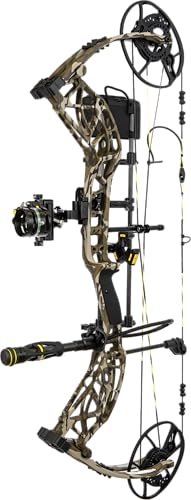
- Includes Fatal 4-Pin Sight with Picatinny mount, Whisker Biscuit V Rest with Integrate Mounting System, Snubnose Stabilizer, 5-…
- Ultra-smooth, highly adjustable, and capable of speeds up to 330 FPS with an 80% let-off for top-tier performance
- Complete Dampening System minimizes noise and vibration with in-limb, in-riser, and string stop technology, while the roller ca…
At the top of the market, incremental gains in speed, noise reduction, and shot feel come at a real price premium, and they matter most to experienced bowhunters who can actually feel and use the difference. For a beginner, this tier is genuinely wasted money – the bow isn’t the limiting factor on a new shooter’s accuracy, practice time is. For an experienced hunter building a dedicated, tuned setup, it’s a legitimate and worthwhile investment.
Noise and Vibration: Why Some Bows Cost More for the Same Speed
Two bows can post nearly identical arrow speeds on paper and feel completely different to actually shoot – one buzzes and jumps at the shot, the other feels dead quiet and settled. That difference comes down to cam design, riser construction, and built-in dampening technology that adds cost without adding raw speed to a spec sheet, which is part of why comparing bows on speed and price alone misses a meaningful part of what you’re actually paying for. Noise and vibration matter more for hunting than target shooting specifically because a loud, jumpy shot gives game more time to react before the arrow arrives – a phenomenon bowhunters commonly call “jumping the string.” Higher-tier bows generally address this better, and it’s a legitimate reason experienced hunters pay more for a bow that isn’t objectively faster than a cheaper option, just quieter and steadier through the shot.
Buying Used: A Legitimate Way to Save on a First Season
A used compound bow from a reputable local archery shop, rather than an unknown private sale, is a genuinely reasonable way to try bowhunting before committing to a new setup, provided the shop can confirm the cams and limbs are in good condition and can adjust draw length and weight to fit you properly. The risk with buying used privately is inheriting a setup tuned for someone else’s specs with no easy way to verify cam timing or limb condition without a bow press and some archery knowledge – a shop-checked used bow avoids most of that risk for a modest inspection fee. This is a reasonable path specifically for a first bow while you’re still learning whether the sport is one you’ll stick with, and less appropriate once you know you’re committed and want a specific setup dialed in from day one.
Which One to Actually Buy
New and young bowhunters should start with an adjustable youth or beginner package rather than overspending before they know their specs – it removes cost as a barrier to actually getting into the sport. Most adult first-time buyers land well with a value adult package, which is a genuinely capable hunting bow on its own. Once you’ve hunted a season or two and know exactly what you want more of, the mid-range tier delivers a real, noticeable upgrade. Reserve premium spending for experienced bowhunters building a dedicated setup where the extra refinement actually gets used.
Hunting requires Alberta Hunter Education certification, a valid licence, and the applicable WMU tag or draw allocation. Regulations, seasons, and firearm/archery equipment rules can change — confirm current requirements at alberta.ca/hunting before you head out.
Related Auburn AI Products
Running an affiliate content site and want to scale? Auburn AI has kits for operators: