
AI-narrated version of this post using a synthetic voice. Great for accessibility or listening while busy.
Affiliate disclosure: PickinRocket participates in the Amazon Services LLC Associates Program. As an Amazon Associate we earn from qualifying purchases. Prices and availability are accurate at publish time but may change.
A boot that fails ten kilometers into a foothills glassing hike doesn’t fail quietly. Blisters, a soaked liner, or a sole that starts separating from the upper turn the rest of a hunt into damage control instead of hunting, which is exactly why boots are one of the few categories where buying based on what’s actually selling and getting repeat recommendations matters more than chasing the newest release. This roundup covers the boots showing up again and again across 2026 gear guides and field tests, sorted by the kind of hunt each one is actually built for.
Why “Best-Selling” Is a Useful Filter Here
Boots are unusually hard to evaluate from a spec sheet — fit varies enormously between brands and even between models from the same brand, and a boot that’s perfect for one person’s foot shape is a blister factory for another’s. What consistent best-seller and repeat-recommendation status actually tells you is that a boot has survived contact with a large number of different feet across a real range of hunts without generating enough return or complaint volume to fall out of rotation. That’s a more useful signal than a single reviewer’s field test, though it’s still not a substitute for trying a boot on with the actual socks you’ll hunt in before committing to a multi-day trip in it.
Comparison: Hunting Boot Tiers
| Tier | Price range | Insulation | Best for | Where it falls short |
|---|---|---|---|---|
| Budget versatile | $150-$280 | Light to none | General season, mixed terrain, backup pair | Less durable over many seasons of hard use |
| Mid-range do-it-all | $280-$400 | Moderate, often swappable | Most Alberta big game hunting across a season | Not built for the coldest late-season sits |
| Premium technical | $400-$500+ | Varies, often minimal by design | Long glassing hikes, foothills and mountain terrain | Overkill and expensive for typical WMU hunting |
| Cold-weather insulated | $300-$500 | Heavy (400g-1200g+) | Late-season stand hunting, sub-zero mornings | Too warm and heavy for active hiking |
Uninsulated vs. Insulated: Match It to How You Hunt
The biggest sorting decision in hunting boots isn’t brand, it’s whether the hunt involves moving or sitting. A hunter covering real ground — foothills glassing, still-hunting through timber, a multi-kilometer pack-in — generates enough body heat that heavy insulation becomes a liability, causing sweat that then chills you the moment you stop moving. A hunter in a stand or blind for hours in late-season cold generates almost no body heat and needs real insulation to stay out past the point discomfort would otherwise force a retreat. Buying one uninsulated, highly breathable boot for active hunts and one heavily insulated boot for cold sits, rather than one compromise boot for both, is the pattern that shows up repeatedly among hunters who’ve been through a few boots already.
GORE-TEX and Waterproofing: What the Membrane Actually Buys You
A GORE-TEX or comparable waterproof-breathable membrane keeps external moisture out — creek crossings, wet grass, morning dew — while still letting some internal moisture vapor escape, unlike a fully rubber or unbreathable waterproof boot that traps sweat inside regardless of what’s happening outside. It’s not magic, and it’s not a substitute for a boot that actually fits and breaks in properly; a membrane boot that’s too tight will still leave your feet damp from sweat with nowhere for that moisture to go fast enough. For Alberta’s mixed wet-and-dry conditions across a season, a genuine waterproof-breathable membrane is worth paying for in nearly every price tier above the absolute budget end.
Best Budget Pick: Danner Recurve

- WATERPROOF CONSTRUCTION for enduring comfort in wet terrain
- DURABLE LEATHER & SUEDE crafted to withstand rugged outdoor adventures
- CUSHIONED FOOTBED provides exceptional support and comfort for long hunting treks
Consistently recommended as the best value in this category, the Recurve gets hunters through a full season of general terrain without the price tag of the technical or premium tiers. It’s not built for the coldest late-season sits or the most demanding mountain terrain, and it doesn’t need to be — for the majority of Alberta hunters covering mixed bush and field terrain across a normal season, it’s genuinely enough boot.
Best for Early-Season Hunts: LaCrosse Lodestar

- We’ve combined nubuck leather and abrasion resistant material for an upper that promises rugged durability.
- 100% waterproof and breathable GORE-TEX liner is engineered to keep your feet dry and comfortable – even in extreme conditions.
- Our DuraFit heel cup locks your heel in place for a snug, secure fit that provides additional stability.
Built lighter and less insulated than a cold-weather boot, the Lodestar suits early-season hunts where temperatures haven’t dropped hard yet and the priority is comfort over a long day of walking rather than standing still in the cold. It’s a strong pick specifically for archery season and early rifle hunts before the weather turns.
Best Do-It-All Pick: Danner Pronghorn
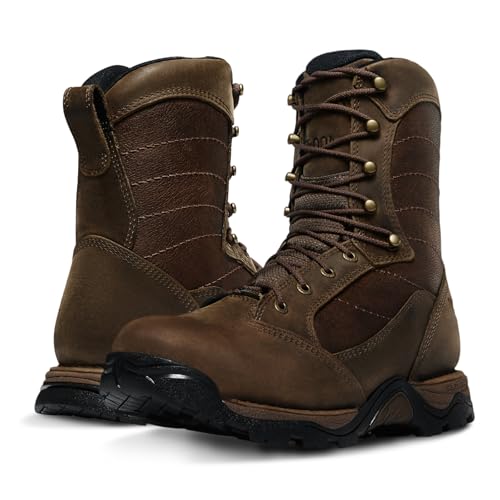
- Purpose-Built Durability: The Danner Pronghorn boots boast rugged full-grain leather and lightweight nylon, delivering reliable…
- Weather-Ready Comfort: Featuring a GORE-TEX waterproof lining, these boots ensure your feet remain dry while allowing breathabi…
- Lightweight Insulation: Equipped with 400 grams of Thinsulate Ultra Insulation, these men’s winter boots provide warmth without…
Repeatedly named as a season-spanning do-it-all boot, the Pronghorn splits the difference between the early-season comfort of a lighter boot and enough insulation to extend into cooler weather without switching pairs mid-season. For a hunter who wants one primary boot rather than swapping between an early and late-season pair, this is the category most reviewers point toward first.
Best Premium Technical Pick: Zamberlan Rugged GTX

- The all-new StarTrek II represents Zamberlan’s largest investment in an outsole package ever.
- Midsoles on the Wasatch are slightly stiffer than on the Outfitter, allowing for a greater set of ap
- Gore-Tex Performance Comfort membranes guarantee waterproof protection and breathability for the lif
A longstanding name in premium Italian-made hunting boots, Zamberlan’s Rugged GTX pairs a Gore-Tex Performance Comfort membrane with a supportive build aimed at genuinely uneven terrain, plus an updated outsole package built for serious traction across a full season of hard use. It’s the right call for foothills and mountain hunters covering serious vertical, and more boot than most flat-terrain, stand-based hunters actually need.
Best for Late-Season Cold: Insulated Pack Boot
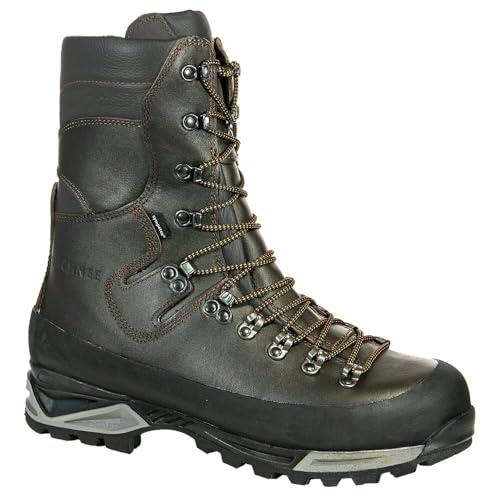
- 100% Waterproof Membrane
- Flex-3 Chassis
- Dual Density 100% Poly Midsole
For sub-zero late-season sits where the priority shifts entirely from mobility to staying warm for hours without moving, a heavily insulated pack-style boot solves a problem lighter boots simply aren’t built for. It trades breathability and weight for warmth deliberately, and it’s the wrong choice for an active hunt where you’ll be generating real body heat — but for a cold stand or blind sit, nothing else on this list keeps feet functional as long.
Weight and All-Day Comfort
A boot’s per-pair weight compounds over a full day of walking in a way that’s hard to appreciate until you’ve actually covered ten or fifteen kilometers in two different boots on back-to-back days. A pound of difference between two boots doesn’t sound like much sitting on a store shelf, but repeated over thousands of steps across a long glassing hike, it translates into real, cumulative fatigue by the end of the day. This is part of why the premium technical tier leans toward lighter construction despite adding support features that would normally add weight — the materials and design work in that tier are specifically aimed at minimizing weight without sacrificing the structure needed for rough terrain. Budget and mid-range boots don’t always make the same tradeoff, sometimes adding bulk and weight in pursuit of a lower price point on materials, which is worth factoring in for anyone whose hunts involve serious daily mileage rather than short walks to a stand.
Ankle Support and Terrain-Specific Features
A boot’s ankle support requirement scales with the terrain it’s actually used on — flat field or bush hunting places relatively little lateral stress on the ankle, while sidehilling on a foothills slope or picking through a rocky creek bed puts real rotational stress on the joint with every uneven step. A taller, stiffer boot shaft with genuine structural support around the ankle reduces rolled-ankle risk on that kind of terrain noticeably compared to a lower, more flexible boot built primarily for comfort on flat ground. The tradeoff is exactly what you’d expect: more ankle support generally means a stiffer, heavier boot that’s less comfortable for long flat-ground walking, so matching this feature to your actual terrain rather than defaulting to maximum support in every case avoids over-buying stiffness you don’t need and under-buying it where it actually matters. Vibram or comparable aggressive-lug outsoles are worth checking for specifically on any boot headed for loose or rocky terrain, since a smoother, less aggressive tread built more for general use can lose real traction on wet rock or loose scree exactly when secure footing matters most.
Sock System: The Cheap Upgrade That Changes How a Boot Fits
A quality merino or synthetic hunting sock does more to change how a boot actually performs than most buyers expect, and pairing an expensive boot with thin cotton socks or the wrong thickness for the boot’s fit undermines the purchase before you’ve taken a step. Merino wool manages moisture and odor better than synthetic options over a multi-day hunt without washing, while a purpose-built synthetic sock is often more durable and dries faster after a wet crossing. Match sock thickness to the boot’s designed fit — a boot sized to accommodate a heavier winter sock will feel loose and cause blisters in a thin summer sock, and the reverse causes a boot to feel painfully tight. Buying two sock weights to pair with one boot across a season’s temperature range is a cheap way to extend one boot’s usable comfort window significantly.
Resoling and Getting Real Years Out of a Premium Pair
Boots in the premium technical tier are often built with resoleable construction — a welted or similar sole attachment that a cobbler can replace once the tread wears down, rather than a fully bonded sole that means replacing the entire boot. This is a real, if easy to overlook, factor in whether a $450 boot is actually better value than replacing a $200 pair every couple of seasons: a resoleable premium boot that gets two or three resoles over its life can end up costing less per year of use than repeatedly buying budget boots, while also holding its supportive fit and break-in longer than a budget boot ever does. Check whether a specific model is resoleable before assuming premium price automatically means premium longevity — not every boot in the higher price tiers is built this way, and it’s worth confirming rather than assuming.
Sizing, Break-In, and the Mistake Almost Everyone Makes Once
Buying a hunting boot in your normal shoe size and expecting it to fit the same way is a common and avoidable mistake — boot sizing runs differently across brands, and a boot that needs to accommodate a heavier hunting sock than a daily walking shoe often fits better half a size up from what the box would suggest. Break in any new pair on shorter walks well before opening day rather than field-testing fit for the first time on a multi-day hunt; a boot that feels fine in a twenty-minute store walk can reveal a pressure point or heel slip only after a few real kilometers, and finding that out mid-hunt rather than mid-September is the difference between a minor annoyance and a ruined trip.
Which One to Actually Buy
For most Alberta hunters covering mixed terrain across a normal season, the Danner Pronghorn or an equivalent mid-range do-it-all boot is the sensible single-pair choice. Budget-conscious hunters get real, proven value from the Recurve tier without a significant compromise for typical hunts. Foothills and mountain hunters covering serious vertical get genuine, noticeable benefit from stepping up to a premium technical boot like the Zamberlan Rugged GTX. And anyone doing serious late-season stand time in real cold should treat an insulated pack boot as a second, dedicated pair rather than trying to make one boot do both jobs — that compromise is where a lot of boot dissatisfaction actually comes from.
Hunting requires Alberta Hunter Education certification, a valid licence, and the applicable WMU tag or draw allocation. Regulations, seasons, and firearm/archery equipment rules can change — confirm current requirements at alberta.ca/hunting before you head out.
Related Auburn AI Products
Running an affiliate content site and want to scale? Auburn AI has kits for operators: