
AI-narrated version of this post using a synthetic voice. Great for accessibility or listening while busy.
Affiliate disclosure: PickinRocket participates in the Amazon Services LLC Associates Program. As an Amazon Associate we earn from qualifying purchases. Prices and availability are accurate at publish time but may change.
Traditional sonar shows you what was under the boat a few seconds ago. Forward-facing sonar, usually shortened to FFS or called “live” sonar, shows you what’s happening around the boat right now — fish suspended off to the side, a school moving through a weed edge, your own jig dropping past a fish that hasn’t committed yet. It’s the biggest actual change in recreational fish finding in a decade, and the last year brought real hardware updates from every major brand rather than just marketing refreshes.
This isn’t a small upgrade. A full forward-facing setup changes how you fish — you start working a piece of structure by watching fish react to your bait in real time instead of guessing from a return that already passed under the hull. It also isn’t cheap, and it isn’t necessary for a lot of Alberta fishing. This guide covers what’s actually new, what a real setup costs beyond the sticker price, and where the technology genuinely pays off versus where a traditional fish finder still does the job fine.
Who This Is Actually For
If most of your fishing happens from shore, a dock, or a small pontoon without a mounted transducer, none of this applies to you — skip to a traditional handheld or castable unit and save the money. Where FFS earns its cost is boat fishing for species that suspend or relate tightly to specific cover: walleye working a mid-lake hump, pike holding on a weed edge, or lake trout suspended over deep water on lakes like Chestermere or the bigger reservoirs. Ice anglers get a second use case entirely — watching a fish approach and react to a jig through the hole in real time, which is arguably where live sonar makes the single biggest difference to catch rates of any application it’s used for.
What Actually Changed in the Last Year
Lowrance’s ActiveTarget 2 replaced the original ActiveTarget lineup with a faster refresh rate and better target separation, closing a gap that used to favor Garmin’s LiveScope almost by default. Humminbird’s MEGA Live 2 brought a similar jump, improving image clarity enough that reviewers who’d been LiveScope-loyal started giving Humminbird a real second look. Garmin hasn’t announced a headline LiveScope replacement this cycle, but the LiveScope Plus transducer remains the reference point competitors are measured against, and Garmin’s 2026 lineup leans on pairing it with updated Eagle and Elite FS display units rather than replacing the sensor itself. None of these are incremental firmware tweaks — they’re new transducer hardware with measurably different image quality.
Comparison: FFS Tiers and What They Actually Cost
| Tier | Price range | What you get | Best for |
|---|---|---|---|
| Castable smart sonar | $150-$300 | Cast-and-retrieve sonar to a phone app, no mount or wiring | No-boat access, shore and dock fishing, budget scouting |
| Entry FFS-capable combo | $600-$1,000 | Display + transducer bundle, basic forward-facing mode | First-time FFS buyers testing the technology |
| Full live sonar bundle | $1,500-$2,500 | Dedicated display, premium transducer, pole mount | Serious boat anglers targeting suspended/structure fish |
| Ice-specific live sonar | $1,000-$1,800 | Portable case, battery, transducer sized for ice use | Ice anglers watching fish react to a jig through the hole |
The Real Cost Isn’t the Unit Price
A forward-facing sonar bundle’s sticker price rarely includes everything needed to actually fish with it. A pole mount to position the transducer independent of the boat’s trolling motor runs $80-$200 depending on quality and adjustability. Cabling long enough to reach a bow-mounted display from a transom-mounted unit, or vice versa, is often sold separately. A second battery or a dedicated power source matters if the unit is running alongside a trolling motor and existing electronics on the same system — FFS displays draw more continuously than a traditional down-looking unit, and an underpowered setup that dims or reboots mid-outing is a common first-season frustration. Budget genuinely closer to the top of a tier’s range once mounting and power are accounted for.
Screen Size Matters More Than the Spec Sheet Implies
A 7-inch display feels adequate in a store and cramped on the water once you’re trying to read a forward-facing return, a chartplotter overlay, and a traditional down-view all at once. Most anglers moving into serious FFS use end up wanting a 9-inch or larger display, or running two smaller screens rather than splitting one. This is a real cost difference between tiers that a spec sheet listing “screen size: 7 inch” doesn’t communicate well — try to see a unit’s actual screen real estate in person or in genuine on-water video before assuming a smaller, cheaper display will feel adequate once you’re using it for the thing it’s actually good at.
Best Budget Entry: Castable Smart Sonar
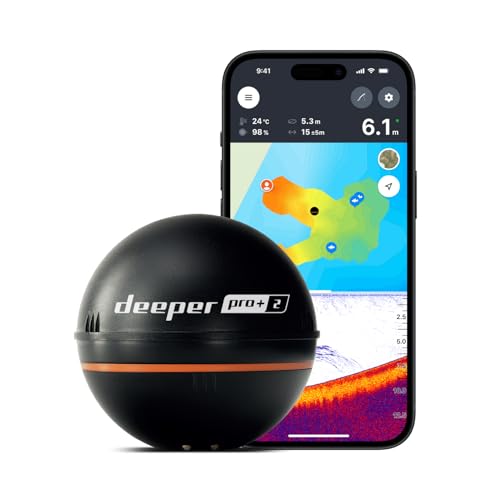
- READY TO PERFORM: Wide beam, mid, and narrow beams make covering large expanses or drilling down on specific spots available at…
- SMART TECHNOLOGY: Accuracy at up to 330 ft; Own dependable Wi-Fi with rock solid connectivity
- PINPOINT ACCURACY: Displays unerring accuracy in the water; Target separation of 0.4 in (narrow beam) and 1 in (wide and mid be…
For anglers without a boat-mounted electronics budget, a castable sonar that pairs to a phone app gives a genuine taste of real-time-ish fish location without any of the mounting, wiring, or four-figure cost of a real FFS bundle. It’s not true forward-facing sonar — it’s a small transducer you cast out and retrieve, reading through an app rather than a dedicated display — but for shore fishing, dock fishing, or scouting a new lake before committing to gear, it solves a real problem at a fraction of the price.
Best for First-Time FFS Buyers: Entry Bundle
Availability and specific models shift often enough that we’re pointing you to live search results rather than a single listing that could be discontinued.
This tier is where most anglers should actually start with forward-facing sonar — enough capability to learn the technology and change how you approach structure fishing, without committing to a $2,000+ system before knowing whether the learning curve and mounting hassle are worth it for how you fish. Garmin’s LiveScope Plus transducer paired with an entry-level compatible display remains the most proven starting combination, with a genuinely large base of tutorials and community knowledge to learn from.
Best Value Update: Lowrance ActiveTarget 2 Bundle

- High‑resolution live sonar module: Delivers ultra‑crisp, real‑time imaging of fish, structure, and lure behavior for precise pr…
- Wide underwater coverage: Provides Forward, Down, and Scout views for full situational awareness around the boat
- Multi‑view capability: Supports simultaneous viewing modes and advanced combinations like Forward+Back and Scout Wide with a se…
The refresh-rate and target-separation improvements in ActiveTarget 2 closed enough of the gap with Garmin’s system that Lowrance-based boats no longer represent a clear step down in FFS capability. For anglers already running Lowrance electronics elsewhere in the boat, staying in-ecosystem with ActiveTarget 2 avoids the mixed-brand mounting and integration headaches that come with running a competitor’s transducer alongside a different primary chartplotter.
Best for Humminbird Boats: MEGA Live 2 Bundle

- MEGA Imaging Technology: Real-time sonar coverage with superior detail and clarity; includes Forward, Down, and Landscape viewi…
- Premium Fish Detection: Optimized sonar cone angle provides precise individual fish targeting while maintaining broad coverage…
- Advanced Navigation Features: Supports waypoint marking for favorite fishing spots; customizable color palettes for enhanced so…
MEGA Live 2’s clarity improvement over the original MEGA Live is significant enough that reviewers who’d written off Humminbird’s forward-facing offering are recommending it again. Like the Lowrance option above, this is the right call specifically for anglers already invested in a Humminbird-based electronics setup rather than a reason to switch ecosystems on its own.
Best for Ice Fishing: Portable Live Sonar Bundle

- Bundle includes the ECHOMAP UHD2 93sv touchscreen combo with keyed assist plus LVS34-IF transducer with GLS 10 sonar black box…
- Transducer cable stays flexible, even in freezing conditions
- Live, real-time scanning sonar offers improved resolution, reduced noise, clearer images and better target separation; allows y…
Watching a fish approach and react to a jig through the ice in real time is one of the more dramatic uses of this technology, and a portable ice-specific bundle packages the transducer, battery, and case for exactly that use without needing a boat mount at all. For serious Alberta ice anglers on lake trout or walleye, this is arguably where forward-facing sonar earns its cost fastest — the direct feedback loop between what you see and what you do with the jig shortens dramatically compared to guessing from a traditional flasher alone.
Which Alberta Species Actually Reward the Technology
Forward-facing sonar’s biggest advantage is watching a fish react to a bait in real time rather than just knowing one is nearby, and that advantage is much larger for some species than others. Walleye suspended over deep basin water or holding tight to subtle bottom transitions are a strong match — they’re often selective enough that watching how a fish responds to jig movement genuinely changes hook-up rates. Pike relating to weed edges or specific ambush points also reward it, since you can watch a fish commit or refuse from a distance rather than guessing why a spot that looked right produced nothing. Species that are aggressive, shallow, and easy to locate with traditional methods — perch schooled up in obvious shallow structure, for instance — benefit far less, since the fish were never hard to find in the first place. Matching the technology to species and technique it actually improves, rather than assuming it helps everything equally, is the difference between a purchase that pays off and one that mostly sits unused after the novelty wears off.
Transducer Mounting and Compatibility Across Brands
Forward-facing transducers are not universally interchangeable across brands, and in most cases not even across a single brand’s older and newer product lines without an adapter or a full display swap. Buying a LiveScope transducer to pair with an existing non-Garmin display, or expecting an ActiveTarget 2 transducer to work with original ActiveTarget hardware without checking compatibility notes first, is a common and expensive mistake. Confirm the specific transducer and display pairing before ordering anything, and if upgrading an existing Garmin, Lowrance, or Humminbird setup rather than building one from scratch, check whether the new transducer requires a display firmware update or a completely new head unit — older displays sometimes lack the processing power to run a newer transducer’s full feature set even when the physical connection is compatible.
The Learning Curve Nobody Puts on the Box
Reading a forward-facing sonar return well enough to translate it into actual bites takes longer than most first-time buyers expect, and it’s genuinely a different skill from reading traditional down-sonar. Fish appear as small blips moving through a live feed rather than as marks on a scrolling history, and learning to distinguish a fish from noise, judge real distance and depth from the display, and connect what you’re seeing to where your bait actually is takes a real season of dedicated practice for most anglers, not a single outing. Watching tutorial content from experienced FFS anglers before your first time on the water shortens that curve meaningfully, and starting on a known piece of structure where you already know fish should be present makes it easier to correlate what the screen shows with what’s actually happening below the boat.
Common Mistakes Buying Into FFS
The most common mistake is buying a full premium bundle before confirming the technology fits how you actually fish — someone who mostly fishes shallow, weedy water for aggressive biters gets far less benefit from forward-facing sonar than someone targeting suspended fish over open water or deep structure. The second is underbudgeting for mounting and power, covered above, which turns a “simple upgrade” into a multi-weekend installation project with unplanned extra cost. The third is expecting immediate results — reading a forward-facing display well enough to actually catch more fish takes real time on the water, closer to a full season than a single outing, and buyers who expect it to work like magic in week one are the ones most likely to regret the purchase.
Which One to Actually Buy
For most Alberta boat anglers curious about forward-facing sonar but not yet certain it fits their fishing, the entry FFS-capable bundle is the sensible way in — real capability, a manageable cost, and enough of a learning curve to know within a season whether stepping up to a full premium system is worth it. Anglers already committed to a Lowrance or Humminbird ecosystem should stay in-brand with the updated ActiveTarget 2 or MEGA Live 2 rather than mixing hardware. Serious ice anglers get the fastest, clearest payoff from a dedicated portable ice bundle. And for anyone without a boat at all, a castable smart sonar unit is a genuinely useful, low-cost way to scout water before spending real money on anything else on this list.
Boating and watercraft regulations, PFD requirements, and access rules vary by waterbody and can change. Confirm current rules at alberta.ca/fishing before you head out.
Related Auburn AI Products
Running an affiliate content site and want to scale? Auburn AI has kits for operators: