
AI-narrated version of this post using a synthetic voice. Great for accessibility or listening while busy.
Affiliate disclosure: PickinRocket participates in the Amazon Services LLC Associates Program. As an Amazon Associate we earn from qualifying purchases. Prices and availability are accurate at publish time but may change.
A kayak bought for the wrong kind of water gets used twice and then sits in a garage. The boat that’s perfect for drifting a slow stretch of the Bow River is the wrong choice for chop on a big reservoir like Gull Lake, and a stable fishing kayak loaded with rod holders is overkill for someone who just wants an evening paddle on a calm pond. This guide sorts kayaks by what Alberta water actually demands, not just by price or brand.
Match the Boat to Your Water, Not the Other Way Around
Alberta’s paddling water splits into a few distinct categories, and they don’t share a boat particularly well. Slow-moving rivers and sheltered lake bays reward a shorter, more maneuverable kayak. Larger open lakes with real wind exposure – Sylvan, Gull, Pigeon on a windy afternoon – reward a longer hull that tracks straight and handles chop without constant correction. Fishing from the kayak adds its own requirements: stability to lean and cast without tipping, and enough deck space and rigging for rod holders and a cooler. Buying based on the water you’ll actually paddle most, rather than the water you’ll paddle occasionally, avoids the most common regret in this category.
Comparison: Kayak Types for Alberta Conditions
| Type | Price range | Length | Best for | Where it struggles |
|---|---|---|---|---|
| Budget sit-on-top recreational | $250-$450 | 9-10 ft | Calm ponds, sheltered bays, casual paddling | Slow, poor tracking in wind |
| Mid recreational sit-inside | $400-$700 | 10-12 ft | Rivers, sheltered lakes, general use | Not built for fishing rigging or big lake chop |
| Dedicated fishing kayak | $700-$1,500+ | 10-13 ft | Lake and slow-river fishing, standing to cast | Heavy, harder to transport solo |
| Touring/lake kayak | $600-$1,000 | 12-14 ft | Larger open lakes, longer paddles, wind | Less maneuverable in tight river bends |
| Inflatable/packable kayak | $200-$600 | Varies | Backcountry access, limited storage or transport | Slower, less durable than hard-shell |
Don’t Skip: PFDs and Transport Gear
A kayak purchase isn’t complete without a properly fitted PFD – Alberta requires one aboard for every occupant, and wearing it rather than just carrying it is the part that actually matters. Budget separately for roof rack pads or a kayak-specific carrier if your vehicle doesn’t already have one; a boat you can’t transport easily gets used less regardless of how good it is on the water.
Kayak Materials: Rotomolded, Thermoform, and Inflatable
Most budget and mid-range hard-shell kayaks use rotomolded polyethylene – heavy but tough, able to take a scrape against rocks without much concern, and the reason these boats are relatively affordable. Thermoform construction, used on some higher-end recreational and touring kayaks, is lighter and has a glossier finish that tracks slightly better through water, but it’s less forgiving of a hard impact and costs more. Inflatable kayaks use PVC or drop-stitch construction depending on the model – drop-stitch, the same technology used in high-pressure paddleboards, holds a rigid shape under high air pressure and performs closer to a hard-shell boat than older-style inflatables did. For anyone paddling rocky Alberta river shorelines regularly, rotomolded polyethylene’s durability is worth the weight penalty; for smooth-bottomed lakes, the lighter options are less of a compromise.
Sizing a Kayak to Your Height and Weight
Cockpit size and hull weight capacity both matter more than most first-time buyers check before ordering. A kayak sized for an average adult can feel genuinely cramped for a taller paddler’s legs, and undersized cockpits make entry and exit awkward, which matters more than it sounds like on a boat you’ll be getting in and out of repeatedly around fishing spots. As with pontoons, treat the stated weight capacity as a ceiling rather than a target – a kayak loaded close to its rated capacity sits lower in the water, is less stable, and is slower to paddle. If you’re near the top of a given model’s weight range, or regularly carrying a dog, cooler, or full tackle load, size up to the next model rather than buying at the edge of what a smaller boat is rated for.
Best Budget Entry: Recreational Sit-On-Top

- PADDLE & STABLE SIT-ON-TOP DESIGN: Includes paddle, Features a flat bottom hull with chine rails that maximize stability and mi…
- DURABLE CONSTRUCTION: Crafted from UV-protected high-density polyethylene (HDPE) that resists impact, weather, and fading, ensu…
- COMFORTABLE PADDLING EXPERIENCE: Equipped with an adjustable quick-release backrest and multiple footrest positions to accommod…
For casual paddling on calm ponds and sheltered lake bays, this class of kayak covers the basics without a major investment – stable enough for a beginner, light enough to load solo onto a roof rack, and forgiving if it spends more time in a garage than on the water some seasons. It’s not built for wind, distance, or fishing rigging, and it doesn’t need to be for the person who wants an occasional evening paddle rather than a dedicated hobby.
Best All-Around: Mid Recreational Sit-Inside

- Premium Fishing Experience: The Perception Pescador Pro 10 is a sit-on-top kayak designed for the recreational angler. Equipped…
- Comfort First: This fishing kayak features an adjustable lawn chair seat, offering a high level of comfort during those long ho…
- Durability & Stability: Crafted to last, the Pescador Pro 10 is made from high-quality materials that withstand the rigors of f…
This tier covers the widest range of typical Alberta paddling – rivers, sheltered lake sections, weekend trips – with better tracking and speed than an entry-level sit-on-top and a manageable price for someone who’ll actually use it regularly. It’s the sensible default for a first “real” kayak, striking a balance most paddlers land on once they know they’ll be on the water more than a couple times a season.
Best for Fishing: Dedicated Fishing Kayak

- Equipped with a saltwater-ready, GPS-enabled Minn Kota trolling motor, the Old Town Sportsman AutoPilot 120 motorized kayak all…
- This high-end fishing machine gets you to your favorite fishing spot faster and keeps you “anchored” using Minn Kota’s Spot-Loc…
- All Old Town Sportsman fishing kayaks are packed with handy convenience features, including customizable accessory tracks, cush…
Built specifically around stability and rigging, a dedicated fishing kayak lets you stand to sight-cast, mount rod holders and electronics, and carry a cooler and tackle without the boat feeling tippy under the extra weight. It’s heavier and pricier than a general recreational kayak, and the tradeoff is worth it specifically for anglers fishing from the boat regularly rather than occasionally bringing a rod along on a paddle.
Best for Big Open Lakes: Touring Kayak

- A best-selling sit-inside Recreation kayak for small to medium sized paddlers
- Best-in-class speed makes the Pungo the easiest to paddle and most efficient kayak in its class
- The renowned hull offers reassuring stability without sacrificing performance
Longer and narrower than a recreational hull, a touring kayak tracks straighter and handles wind and chop noticeably better – the difference matters on lakes like Sylvan or Pigeon on anything but a dead calm day. It gives up some maneuverability in tight spots, which makes it a worse choice for winding river sections, but for covering real distance on open water without fighting the boat the whole way, it’s the right tool.
Best for Limited Storage or Backcountry Access: Inflatable Kayak
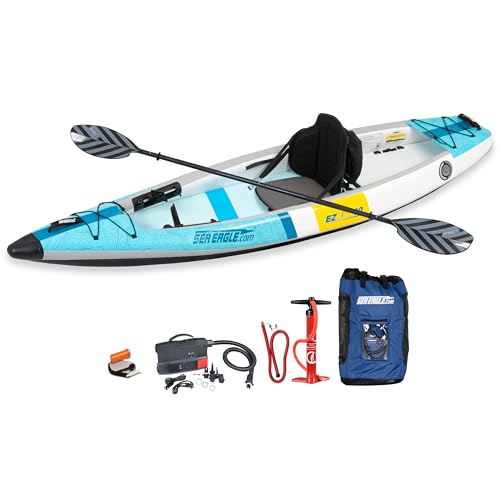
- MADE WITH ALL WOVEN DROP STITCH CONSTRUCTION top and bottom. The V-bottom glides on the water and provides excellent primary st…
- V-BOTTOM EXTENDS THE FULL LENGTH OF THE BOTTOM to make paddling faster and easier and also allows the EZLite 10 to track better…
- MADE WITH ALL WOVEN DROP STITCH CONSTRUCTION top and bottom making this a very rigid high erformance kayak. Weighs just 26 lbs….
An inflatable kayak trades some speed and durability for the ability to store it in a closet and carry it in a duffel bag rather than needing roof racks or a trailer. Modern inflatable materials have closed much of the performance gap with hard-shell boats, though they still puncture more easily on rocky shorelines and won’t track quite as well in wind. For apartment dwellers, backcountry access where you’re hiking in, or anyone without a good way to transport a hard-shell boat, it opens up paddling that otherwise wouldn’t happen.
Storage Between Seasons: Protecting a Hull Through an Alberta Winter
A kayak left outside through a full Alberta winter takes real damage even when it’s not being paddled – UV exposure fades and weakens plastic hulls over years of sun even in cold months, and repeated freeze-thaw cycles can stress a hull resting unevenly on hard ground or a rack. Store it under cover if at all possible, ideally on padded racks or slings that support the hull along its length rather than leaning it on one end or hanging it by the handles, both of which can cause a slow, permanent warp over months of storage. Inflatable kayaks need to be fully dried before folding away for winter storage – packing one away damp is a reliable way to grow mildew inside material you can’t easily clean once it’s set in. None of this is complicated, but it’s the difference between a kayak that looks and performs the same after five winters and one that’s visibly degraded after two.
Which One to Actually Buy
For most Alberta paddlers splitting time between rivers and sheltered lake water, the mid recreational sit-inside is the practical default – capable enough for real use, priced reasonably, easy to transport. Anglers fishing from the boat regularly should budget for a dedicated fishing kayak rather than trying to rig a recreational hull after the fact. Paddlers focused on bigger open lakes get real, noticeable benefit from a touring hull’s tracking in wind. And if storage or transport is the real constraint, an inflatable kayak is the option that actually gets used instead of sitting in a garage. Whichever type you land on, spend the extra few dollars on a properly fitted PFD and a paddle sized correctly for your height and the kayak’s width before your first trip out – both are easy to under-budget for after already spending on the boat itself, and both directly affect how comfortable and safe that first season on the water actually is.
Boating and watercraft regulations, PFD requirements, and access rules vary by waterbody and can change. Confirm current rules at alberta.ca/fishing before you head out.
Related Auburn AI Products
Running an affiliate content site and want to scale? Auburn AI has kits for operators: