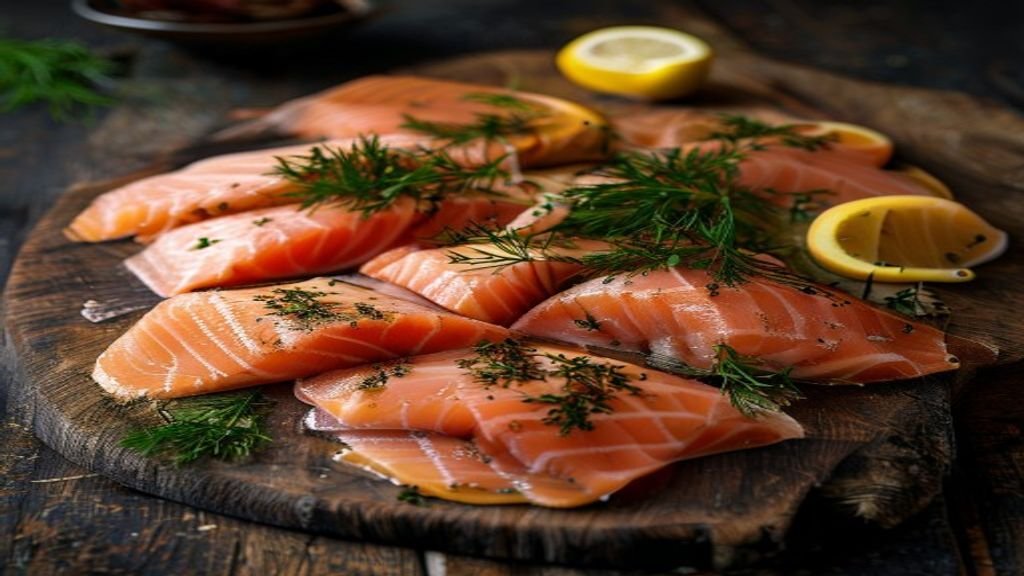
How to Brine and Smoke Alberta Lake Trout: A Beginner’s Method
Alberta lake trout — Salvelinus namaycush, also called lakers, mackinaw, or namaycush — are a cold, deep-water char with rich, fatty flesh that holds up exceptionally well to smoking. Cold Lake is the province’s most accessible public fishery for this species, drawing anglers from across Alberta for its well-established lake trout population. Certain northern waters also hold lakers under special management regulations. Traditionally, smoking was the practical answer to a successful multi-fish day: it extends shelf life, concentrates flavour, and produces something far more interesting than a basic pan-fry. If you’ve kept fish within your legal possession limit, smoking them properly is one of the most respectful things you can do with your harvest.
Before You Start: Legal and Practical Reality
Possession limits for lake trout in Alberta are set annually and vary by water body. Do not rely on this article for specific numbers — consult the current Alberta Sport Fishing Regulations before you keep a single fish. Regulations are updated yearly, and limits on sensitive species like lake trout can change based on population assessments.
If you’re processing fish at the lake or at a camp, keep accurate records. Alberta’s shore-lunch rules require that fish be identifiable as to species and number until fully consumed or processed — a common compliance failure is cleaning fish before reaching your accommodation, leaving nothing to confirm your count.
More importantly: the Alberta Wildlife Act includes wanton-waste provisions. Keeping a fish and then discarding usable portions is not just wasteful — it can be an offence. Smoke the belly strips. Use the frames for stock. Render what you can. A kept lake trout deserves full utilization, and the regulations expect nothing less.
Equipment Checklist
- Smoker: Any pellet smoker, electric cabinet smoker, or offset charcoal smoker works. For traditional cold-smoking, a dedicated cold-smoke generator (like a ProQ or Smoking Daddy) attached to a separate chamber is the cleanest setup. Cold-smoking requires keeping the smoking chamber under 100°F — the heat source must be physically separated from the food.
- Wood: Alder is the classic choice for fish — mild, slightly sweet, and nearly universal in Pacific and Northern smoking traditions. Apple, cherry, and maple are all excellent alternatives. Avoid mesquite entirely — it overwhelms the delicate fat of lake trout and produces a bitter finish. Hickory is borderline; use it sparingly if at all.
- Brine container: Food-grade only — a large zip-lock bag, a food-safe plastic tub, or a non-reactive glass or stainless-steel container. Avoid aluminum, which reacts with salt.
- Wire racks: Needed for pellicle formation. The fish must have airflow on all sides. Cake cooling racks on a sheet pan work fine.
- Probe thermometer: Non-negotiable for hot-smoking. You need to hit an internal temperature of 145°F (63°C) to meet food safety standards for fish.
The Brine Recipe (for approximately 2 lbs of fillets)
This is a wet brine — reliable, forgiving, and easy to scale. The ratio that matters is salt-to-water; everything else is flavour.
| Ingredient | Quantity |
|---|---|
| Cold water | 4 cups |
| Kosher salt | ½ cup |
| Brown sugar | ¼ cup |
| White sugar | 2 tbsp |
| Cracked black pepper | 1 tbsp |
| Bay leaves | 2–3 |
Optional additions: 3–4 crushed garlic cloves, a generous handful of fresh dill, 6–8 whole juniper berries (lightly crushed), or the zest of one lemon or orange. These are additions, not substitutions — keep the core salt-sugar ratio intact.
Why This Ratio Works
Salt at roughly 5–6% of the water weight draws moisture from the flesh through osmosis while simultaneously pushing salt inward, firming the protein structure and inhibiting bacterial growth. The sugar balances harshness, aids surface browning, and provides some caramelization during hot-smoking. Brown sugar adds a faint molasses note that pairs naturally with alder smoke.
Dry Brine Option
Dry brining skips the water entirely. Combine ¼ cup kosher salt with 3 tbsp brown sugar and your aromatics, then coat the fillets generously and refrigerate on a rack for 6–8 hours. The fish will release its own liquid, creating a concentrated brine around the flesh. Many experienced smokers prefer dry brining because it produces a drier surface — which accelerates pellicle formation. It’s slightly less forgiving on timing, since there’s no dilution buffering the salt contact.
Step-by-Step Method
Step 1: Fillet and Remove Pin Bones
Fillet the lake trout and remove the skin only if you prefer — skin-on holds up better in the smoker and helps keep the fillet intact. Run your finger along the lateral line to locate pin bones, then remove them with needle-nose pliers or dedicated fish tweezers. Pull toward the head end to avoid tearing the flesh. Rinse the fillets under cold water and pat dry before brining.
Step 2: Brine for 8–12 Hours
Submerge the fillets completely in the cold brine. If they float, weigh them down with a small plate. Refrigerate — do not brine at room temperature. For fillets under an inch thick, 8 hours is sufficient. Thicker pieces can go to 12 hours. Beyond 12 hours, the salt penetration continues and the texture begins to suffer, becoming dense and overly salty near the surface.
Step 3: Rinse and Pat Dry
Remove the fillets from the brine and rinse thoroughly under cold running water. This step removes surface salt that would otherwise crystallize into white, bitter patches during smoking. Pat completely dry with paper towels.
Step 4: Form the Pellicle (4–8 Hours)
This step is non-negotiable. Place the fillets skin-side down on wire racks and refrigerate uncovered, or set them in front of a fan in a cool, clean space. The pellicle is the tacky, slightly glossy surface layer that forms as proteins bind at the surface. Without a pellicle, smoke bounces off the fish rather than adhering — the flavour will be thin and the surface will be wet and unpleasant. The surface should feel tacky but not wet before you load the smoker. Typically 4 hours in front of a gentle fan, or 6–8 hours uncovered in the fridge.
Step 5: Smoke
Cold-smoking (60–100°F / 15–38°C): Run the smoker for 8–12 hours. Cold-smoked fish is not cooked — it is preserved and flavoured. The texture remains silky and almost raw in the centre, similar to lox. Cold-smoked lake trout should be refrigerated and consumed within 1–2 weeks, or vacuum-sealed and frozen. If your setup cannot reliably hold under 100°F, do not attempt cold-smoking without researching food safety protocols for your specific rig.
Hot-smoking (175–200°F / 80–93°C): Hot-smoking fully cooks the fish. Load the fillets skin-side down and smoke until the internal temperature reaches 145°F (63°C) — typically 2–4 hours depending on fillet thickness and smoker consistency. Pull at 140°F if using a probe, as carryover will finish the job. The flesh will flake cleanly, and the surface will have a deep amber glaze.
Storage and Serving Suggestions
Hot-smoked lake trout keeps refrigerated for up to 5 days, or vacuum-sealed and frozen for up to 3 months. Cold-smoked product is more variable — freeze what you’re not eating within 48 hours.
Serve hot-smoked trout flaked over a wood board with cream cheese, pickled red onion, capers, and rye crackers. It works equally well stirred into scrambled eggs, folded into a smoked fish chowder, or used as a filling for pierogies. Cold-smoked slices pair well with thin-sliced cucumber, fresh dill, and a sharp grain mustard.
Common Mistakes
- Over-brining: Going past 12 hours in a wet brine at this concentration will produce fish that is texturally chalky and aggressively salty. Set a timer.
- Skipping the pellicle: The most common beginner error. A wet surface going into a smoker will steam rather than smoke, and the result is pale, soggy, and weakly flavoured.
- Temperature creep in cold-smoking: If your cold smoker climbs above 100°F during a warm Alberta summer day, you’re no longer cold-smoking — you’re partially cooking with intermittent smoke. Monitor ambient temperature carefully.
- Using mesquite or heavy hardwoods: Lake trout has a delicate, fatty profile. Mesquite and strong hickory obliterate it. Stick with alder, apple, or cherry.
- Not probing for temperature: Eyeballing doneness on fish in a smoker is unreliable. A probe thermometer is a $15–30 investment that eliminates guesswork and food safety risk simultaneously.
Where to Fish Lake Trout in Alberta
Cold Lake is the primary publicly accessible lake trout destination in the province, straddling the Alberta-Saskatchewan border in the Lakeland region near the town of Cold Lake. It’s a deep, cold lake system with an established population and infrastructure supporting guided and self-guided angling. Check current regulations for zone-specific limits before any trip.
Several other northern Alberta lakes hold lake trout under management-specific regulations, some of which carry reduced or zero-retention rules depending on population status. These are worth researching individually through AEP’s fisheries data.
A note on species confusion: lake trout and bull trout are different species. Bull trout (Salvelinus confluentus) are a provincially sensitive species with strict catch-and-release designations across most Alberta waters. Know the difference before you keep anything. Bull trout have no spots on their dorsal fin and feature pale pink-yellow-red spots on a darker body. Lake trout have deeply forked tails and a pattern of pale, irregular spots on a grey-green background. If you’re uncertain, photograph and release.
Important: Verify Current Rules Before You Fish or Keep Any Lake Trout
Possession limits, retention rules, and season dates for lake trout in Alberta change annually and vary significantly by water body. This article does not substitute for current regulations. Always check the Alberta Sport Fishing Regulations at alberta.ca/fishing before you head out — and carry your licence, your regulations, and a clear species ID in the boat.