
AI-narrated version of this post using a synthetic voice. Great for accessibility or listening while busy.
Affiliate disclosure: PickinRocket participates in the Amazon Services LLC Associates Program. As an Amazon Associate we earn from qualifying purchases. Prices and availability are accurate at publish time but may change.
A dry bag earns its keep the one time it actually matters — a canoe tips slightly taking on splash, a sudden rain squall hits an open boat, a phone gets set down on a wet dock — and does nothing for you every other trip where the water stayed calm and the sky stayed clear. That asymmetry is exactly why it’s worth buying a real dry bag rather than assuming a “water-resistant” backpack pocket will cover it. This roundup covers what’s actually selling well across paddling, fishing, and general camping use in 2026, sorted by what you’re actually trying to protect rather than just capacity in liters.
Roll-Top vs. Zippered: The Core Design Decision
A true roll-top dry bag — fold the top down several times and clip it — remains the most reliably waterproof design because it has no zipper seam for water to find a way through, and it’s genuinely fully submersible when rolled correctly. Zippered dry bags using a waterproof or water-resistant zipper are more convenient for frequent access, since you’re not unrolling and re-rolling every time you need something, but even a good waterproof zipper is a weaker point than a properly rolled top, especially under sustained submersion rather than splash exposure. For gear that absolutely cannot get wet — a phone, a satellite communicator, a spare set of dry clothes for a cold-water trip — a true roll-top remains the safer choice; for gear you’re accessing constantly where some splash resistance is enough, a zippered option is a reasonable convenience tradeoff.
Comparison: Dry Bag and Storage Types
| Type | Price range | Waterproof rating | Best for |
|---|---|---|---|
| Basic roll-top dry bag (single) | $15-$35 | Fully submersible when rolled properly | Budget protection for a specific item or small kit |
| Multi-size dry bag set | $30-$60 | Fully submersible when rolled properly | Organizing gear by category, best value per bag |
| Dry bag backpack | $50-$100 | Fully submersible, carries like a pack | Hiking to a put-in, kayak/canoe day trips |
| Premium submersible backpack | $150-$250 | Rated for extended submersion, rugged material | Serious boating, fishing guides, harsh daily use |
| Heavy-duty specialty dry bag | $80-$150 | Fully submersible, reinforced material | Whitewater, extended expeditions, abrasion-heavy use |
Denier and Material: What Actually Predicts Durability
The denier rating on a dry bag’s fabric is a rough measure of thread thickness and correlates loosely with abrasion resistance — a higher denier fabric shrugs off contact with a rocky shoreline or a boat’s rough interior better than a lower denier bag, at some cost in weight and packed size. Welded seams, rather than stitched-and-taped seams, are generally the more reliable waterproofing method on a quality dry bag, since a welded seam has no needle holes to seal in the first place. Cheaper bags often use PVC, which is durable but heavier and less packable; premium bags increasingly use lighter TPU-coated nylon that achieves similar waterproofing at a lower weight, at a real price premium.
Best Budget Value: GliCraft Multi-Size Set

- 6 Versatile Sizes in One Set: this waterproof dry bag set includes 6 practical capacities, namely 3 L, 5 L, 10 L, 15 L, 20 L, a…
- Stay Organized on Every Adventure: instead of mixing everything together, these dry sacks let you separate clothing, electronic…
- Durable Yet Lightweight Construction: made from quality polyester taffeta fabric with seamless welded technology, each waterpro…
Covering six different capacities in one purchase, GliCraft’s set solves the common problem of needing different bag sizes for different gear categories — electronics, spare clothing, food — without buying each size separately at full individual price. For anglers or campers just getting into proper waterproof storage, this is the lowest-cost way to actually cover a full kit rather than protecting just one item.
Best All-Around Dry Bag: SealLine Discovery View

- Made from a lightweight, durable, and PVC-free fabric that withstands frequent and demanding use
- DrySeal roll-top closure is easy to use and provides a waterproof seal
- Oval bottom prevents rolling in dry holds while also making it easier to pack
Consistently ranking near the top of independent testing for balancing waterproof performance, usability, and price, the Discovery View adds a clear panel that lets you actually see what’s inside without opening the roll-top — a small feature that saves real time and unnecessary opening-and-closing when you’re just trying to confirm what’s in which bag. It’s the pick most gear guides default to when asked for one genuinely reliable dry bag recommendation.
Best Dry Bag Backpack: Earth Pak Waterproof Backpack

- Trusted on the water: this waterproof roll top dry bag keeps gear dry for kayaking, boating, paddleboarding, rafting, canoeing…
- Built to carry: straps vary by size, so the 10L and 20L dry bags include a 24 to 42 inch adjustable shoulder strap, while the 3…
- Stays protected in and on the water: made from abrasion resistant 500D PVC with a roll top seal, this dry bag includes an IPX8…
Carrying like a real backpack rather than a bag with straps bolted on, the Earth Pak design solves the hike-to-the-water problem — getting gear from a vehicle to a put-in or a remote fishing spot comfortably, then having it stay dry once you’re actually on the water. It’s a strong pick for kayak and canoe day trips where the approach involves real walking distance before paddling begins.
Best Premium Pick: YETI Panga Submersible Backpack
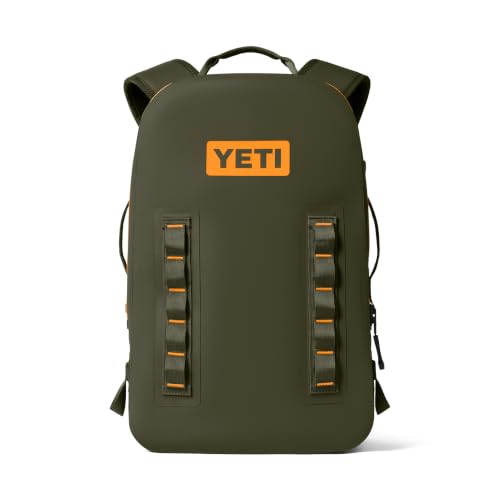
- The Panga Backpack is an airtight, waterproof fortress merging the durability of the Panga Duffel with a tried-and-true backpac…
- The ergonomic DryHaul Shoulder Straps offer extra carrying comfort, while the removable chest straps and waist belt provide add…
- With our HYDROLOK ZIPPER the water stays out so your gear stays bone-dry, no matter how torrential it gets
Built for serious daily abuse — fishing guides, rough boat conditions, gear that needs to survive being dropped, sat on, and soaked repeatedly across a season — the Panga’s rugged material and airtight construction justify a real premium price for anyone whose gear protection needs go beyond occasional recreational use. It’s more bag than most casual campers need, and exactly the right amount of bag for anyone using it hard, regularly, in genuinely wet conditions.
Best for Whitewater and Expedition Use: Watershed Ocoee
Availability and specific models shift often enough that we’re pointing you to live search results rather than a single listing that could be discontinued.
Using a fully welded, zipperless closure system rated for genuine extended submersion rather than incidental splash, the Ocoee is built for conditions harsher than typical recreational paddling produces — whitewater, multi-day river expeditions, situations where a bag might actually go fully underwater rather than just get rained on. For anglers and paddlers on calmer Alberta lakes and slow rivers, it’s more durability than most trips call for; for genuinely rough water, it’s a proven, trusted choice.
Attachment Points and Securing Gear to a Boat or Pack
A dry bag that stays where it’s placed matters as much as one that stays dry, and a bag without solid D-ring or webbing attachment points can shift, slide, or in the worst case go overboard entirely in rough water or a bumpy portage trail. Check for reinforced attachment points rated for actual load, not just decorative loops, particularly for any bag being lashed to a canoe thwart, a kayak deck, or the outside of a pack rather than carried inside a larger bag. A carabiner or short length of webbing run through a genuinely load-rated attachment point is a small, inexpensive step that prevents the specific and fairly common mishap of a dry bag separating from a boat during a capsize or a rough water crossing — exactly the scenario where the bag’s contents needed to stay both dry and with you.
Choosing Capacity for a Multi-Day Trip
Sizing a dry bag correctly for trip length avoids two common mistakes that pull in opposite directions — a bag too small forces overpacking that strains seams and makes a proper roll-top seal harder to achieve, while a bag too large wastes pack space and, as covered above, traps excess air that works against a tight seal. As a rough starting point, a 10-15 liter bag suits a day trip’s essentials, 20-30 liters covers a weekend’s clothing and gear for one person, and 40 liters or more starts to make sense for multi-day trips or when one bag needs to cover a second person’s gear as well. These are starting points, not fixed rules — bulkier items like a sleeping bag or extra layers for cold-weather trips push actual volume needs higher than a simple day-count estimate would suggest, so it’s worth doing a rough test-pack before a trip rather than guessing at capacity from a product listing alone.
Getting a Proper Roll-Top Seal: A Technique, Not Just a Feature
A roll-top dry bag’s waterproofing depends heavily on the user actually rolling it correctly, and this is a genuinely common point of failure that has nothing to do with the bag’s quality — most manufacturers recommend at least three full rolls of the top before clipping the buckle, and a bag rolled only once or twice, or rolled with the top not fully squeezed flat first, can leak even though the bag itself is perfectly sound. Squeeze excess air out before rolling, keep the rolled section flat and even rather than twisted, and make sure both buckle ends are actually engaged and not just resting against each other. This is worth practicing on dry land before a trip where the contents genuinely can’t get wet, since the first time most people learn they’ve been rolling a dry bag incorrectly is exactly the time it matters least conveniently — mid-trip, with already-wet gear to show for it.
Packing Strategy: Sorting by Contents, Not Just Capacity
Using color-coded or clearly labeled bags for different gear categories — electronics in one color, spare clothing in another, food in a third — saves real time and frustration compared to digging through one large bag to find a specific item, especially in the rain when speed and keeping the bag open for the shortest possible time both matter. This is the practical case for a multi-size set over a single large bag even when total capacity works out similar: several smaller bags let you access one category of gear without exposing everything else to weather in the process. It’s a small organizational habit that pays off disproportionately the first time you need one specific item quickly and don’t want to empty an entire oversized bag onto a wet dock or riverbank to find it.
UV Exposure and Long-Term Material Degradation
Dry bag material, whether PVC or TPU-coated nylon, degrades gradually under sustained UV exposure, becoming more brittle and prone to cracking or seam failure over years of regular sun exposure — a real consideration for a bag that lives strapped to the outside of a canoe or kayak deck rather than stored inside a pack between uses. Rinsing bags with fresh water after saltwater or heavily silted use, drying them fully before long-term storage, and storing them out of direct sun when not in use all meaningfully extend a bag’s usable lifespan. A dry bag that’s been left inflated and baking in direct sun on a dock all summer for several seasons running is a common way a seemingly durable bag fails unexpectedly on a trip years after purchase, well past when normal wear-and-tear alone would explain it.
Sizing: Bigger Isn’t Automatically More Useful
A dry bag that’s oversized for what’s actually inside it traps more air, which makes it float higher and bulkier and harder to pack efficiently into a canoe, kayak hatch, or truck bed alongside other gear. Sizing closer to the actual volume of what you’re storing, then rolling out excess air before sealing, both improves waterproofing — less trapped air means less pressure working against the seal — and makes the bag easier to pack. Buying one oversized bag to cover everything is a common mistake; a few appropriately sized bags for different gear categories, as in the multi-size set option above, is usually the more practical approach.
Which One to Actually Buy
For most anglers, paddlers, and campers wanting solid, dependable protection without overspending, the SealLine Discovery View is the safe default single-bag recommendation. Anyone needing to protect a full range of gear types should start with a multi-size set like GliCraft’s rather than buying one bag and hoping it covers everything. Trips involving a real hike to the water benefit from a proper dry bag backpack like the Earth Pak. Reserve the YETI Panga for genuinely hard daily use, and the Watershed Ocoee specifically for whitewater or extended expedition conditions rather than typical Alberta lake and slow-river trips where it’s more bag than the situation calls for.
Backcountry access, Crown land camping, and public land use rules can change seasonally. Confirm current requirements at alberta.ca before you head out.
Related Auburn AI Products
Running an affiliate content site and want to scale? Auburn AI has kits for operators: