
AI-narrated version of this post using a synthetic voice. Great for accessibility or listening while busy.
Affiliate disclosure: PickinRocket participates in the Amazon Services LLC Associates Program. As an Amazon Associate we earn from qualifying purchases. Prices and availability are accurate at publish time but may change.
Butane-cartridge mosquito repellers have been the camping standard for years, and they work — but they also mean packing spare fuel cartridges, remembering to check if one’s running low mid-trip, and dealing with an open flame element that isn’t something you want a kid or a dog knocking into. The last couple of product cycles have pushed a real alternative: rechargeable, battery-powered repellers using the same active ingredients without a flame or a fuel cartridge to manage. This is a genuinely newer category solving a specific, real annoyance rather than a marginal upgrade on something that wasn’t broken.
What Problem This Actually Solves
A butane repeller needs a lit element to vaporize its repellent, which means an open flame source at a campsite, a cartridge that depletes on a schedule separate from the device’s battery, and a device that’s noticeably warm to the touch during use. A rechargeable repeller uses a small internal heating element powered by battery instead, vaporizing a liquid or cartridge-based repellent without an open flame, and recharges via USB like most other camp electronics already do. For families with young kids around the fire pit and campsite, removing an open flame source from the mosquito-control equation specifically is a real, tangible safety improvement, not just a convenience one.
Comparison: Rechargeable Bug Protection Options
| Type | Price range | Coverage area | Best for |
|---|---|---|---|
| Compact personal/tent-pad repeller | $30-$60 | Roughly 15-20 ft radius | Picnic tables, tent doors, small sitting areas |
| Larger zone repeller | $50-$90 | Roughly 20-30+ ft radius | Full campsite or patio-sized coverage |
| UV/light-based insect trap | $40-$80 | Varies, attracts rather than repels | Supplementing a repeller, reducing flying insects near lights |
| Portable rechargeable trap | $60-$120 | Zone coverage, works while unattended | Overnight coverage without a live flame or exposed heating element |
Repellent vs. Trap: Two Different Mechanisms
A repeller works by creating a zone of repellent vapor that discourages mosquitoes from entering the area at all — it doesn’t kill anything, it just makes the space around it unappealing to bite from. A trap, UV-light or otherwise, actively attracts and captures insects, which reduces the local population over time but doesn’t create an immediate no-bite zone the way a repeller does. Many campers get the best practical result running both — a repeller creating an immediate comfortable zone around where people are actually sitting, and a trap running elsewhere at camp to reduce overall insect pressure across a longer stay. Treating them as competing options rather than complementary tools is a common reason either one alone can feel underwhelming.
Battery Life Is the Real Spec to Check
Runtime per charge varies more between models in this category than the coverage-area numbers suggest, and a repeller that only lasts three or four hours per charge means either running it off a power bank continuously or accepting gaps in coverage during a multi-day trip without reliable charging access. Look specifically for stated runtime on a full charge, and treat marketing runtime numbers as a best-case figure — actual runtime tends to run somewhat shorter in cooler temperatures, which is relevant for shoulder-season Alberta camping where evenings can be cold enough to affect battery performance across any rechargeable device, not just this one.
Best Overall Pick: Thermacell Radius Zone Gen 2.0

- EFFECTIVE MOSQUITO PROTECTION: Thermacell Radius Mosquito Repellent creates a 10-foot zone of protection against mosquitoes. Ea…
- HEAT-ACTIVATED TECHNOLOGY: Powered by a rechargeable lithium-ion battery with up to 6.5 hours of continuous mosquito protection…
- EFFECTIVELY REPEL WITHOUT SPRAY OR SCENT: Repel mosquitoes without DEET sprays or lotions on your skin. No smoke, flames, or ha…
The most established rechargeable option in this category, the Radius Zone’s second generation improved runtime and simplified the controls down to essentially one button, making it about as close to foolproof as this type of device gets. It covers a real zone — enough for a picnic table or small sitting area — without an open flame or a cartridge to track separately from the battery, and it’s the pick most camping gear guides default to first.
Best for Full Campsite Coverage: Thermacell E-Series

- SCIENTIFICALLY PROVEN MOSQUITO PROTECTION: Thermacell is tested and proven to repel mosquitoes from a 20FT zone. Trusted by out…
- 20FT ZONE OF MOSQUITO PROTECTION: Proprietary formula provides the largest protection zone of all EPA registered mosquito repel…
- EASY TO USE, NO SPRAY NEEDED: This on-demand mosquito repellent outdoor patio solution starts heating with the push of a button…
Built for a larger coverage area than the compact Radius Zone, the E-Series aims at covering a full campsite rather than just an immediate sitting area, which matters more for group camping or a site with multiple activity zones spread across a larger footprint. It draws more from its battery to cover that larger area, so runtime-per-charge expectations should be adjusted down somewhat compared to the smaller compact units.
Best Supplementary Option: Rechargeable Outdoor Insect Zapper

- 4200V Instant Mosquito Killing – Our Our outdoor mosquito repellent packs a serious punch. The 360° surrounding mesh ensures mo…
- 2100 Sq. Ft. Powerful Coverage – The bug zapper with a broad coverage area of up to 2100 square feet, this device means busines…
- 24/7 Intelligent Light-Sensing Chip – Thanks to its smart light-sensing chip, the device works on autopilot. Just press the aut…
Rather than repelling, this trap actively attracts and captures flying insects using light rather than a chemical repellent, making it a genuinely different tool from the repellers above rather than a direct competitor. Running one near a light source or activity area at camp, in addition to a repeller closer to where people are sitting, is the combination that tends to produce the most noticeable overall reduction in bug pressure across a longer stay.
Best for Unattended Overnight Use: Portable Rechargeable Trap
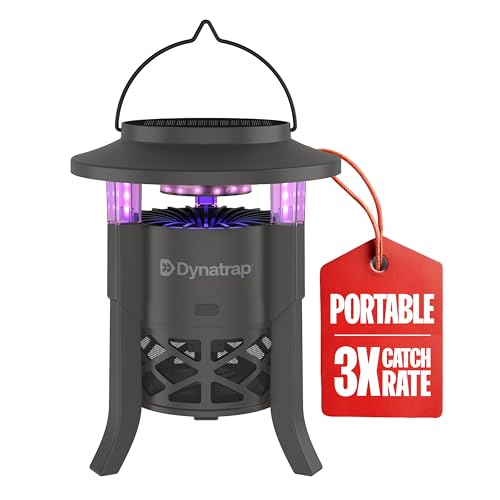
- POWERFUL CATCH RATE: Eliminates 3X more mosquitoes than leading bug zappers*. The UV-LED lights and whisper-quiet fan capture m…
- DUSK-TO-DAWN SETTING: Trap turns on automatically at night and off in the morning. Works best when plugged in, or runs cordless…
- RECHARGEABLE: Features rechargeable battery for up to 5 hours of cordless operation to target hard-to-reach problem areas in th…
For campers wanting some level of insect reduction running through the night without an open flame or a device that needs monitoring, a rechargeable trap designed for extended unattended operation fills that specific gap. It won’t create the same immediate no-bite zone a repeller does around people actively sitting nearby, but for reducing insect pressure at camp overnight while everyone’s in a tent, it’s a genuinely useful complement to a repeller used during active hours.
Scent Considerations for Hunting Camps Specifically
Hunters using a rechargeable repeller at a hunting camp, rather than a general recreational campsite, have an additional factor to weigh that campers generally don’t: whether the repellent’s active ingredient carries any scent detectable to game at close range. Most metofluthrin-based repellents used in rechargeable devices are marketed as scent-free to humans, but “scent-free to humans” and “undetectable to an animal’s far more sensitive nose” aren’t the same claim, and there’s limited independent testing specifically addressing whether these devices affect nearby game behavior. The practical approach most experienced hunters take is running a repeller at a base camp or cook area away from an actual stand or blind, rather than directly at the hunting location itself, keeping the convenience benefit where it doesn’t risk scenting an approach.
Setup Time and Positioning at Camp
Most rechargeable repellers need a short warm-up period after switching on before reaching full effective coverage, typically somewhere in the ten-to-fifteen-minute range depending on the model, which means turning one on the moment bugs become noticeable rather than proactively before an evening sit means tolerating bites during that initial window regardless of how good the device is once fully active. Running a repeller for a few minutes before people actually sit down to eat or gather around a fire closes that gap. Positioning also matters beyond just accounting for wind direction — placing a unit at roughly table or seated-head height, rather than on the ground, keeps the repellent zone concentrated around where people are actually exposed rather than dispersing uselessly below knee level where mosquitoes are less actively biting in the first place.
Wind Is the Real Limiting Factor for Any Repeller
A repeller’s stated coverage radius assumes calm or near-calm air, and even a modest breeze can push the repellent vapor zone well off-center or thin it out enough to meaningfully reduce real-world effectiveness compared to the box’s stated numbers. This isn’t a flaw specific to any one brand or model — it’s a physical limitation shared by every vapor-based repeller regardless of price, and it’s worth setting realistic expectations around rather than assuming a device rated for a 20-foot radius will hold that radius reliably on a breezy evening at an open campsite. Positioning a repeller upwind of where people are actually sitting, so the vapor blows across the occupied area rather than away from it, makes a meaningful practical difference and costs nothing beyond thinking about wind direction before setting up rather than after the bugs have already arrived.
Combining With Traditional Repellent Rather Than Replacing It
A zone repeller creates protection in a defined area around the device, but it does very little for someone actively moving away from that zone — walking to a tree stand, hiking to a fishing spot, or simply wandering to the far side of a campsite steps outside the coverage radius entirely. Traditional DEET or picaridin-based repellent applied to skin and clothing remains the more reliable choice for active movement away from a fixed point, while a rechargeable zone repeller is the better tool for a stationary activity like sitting at a picnic table, cooking, or sitting around a fire. Treating these as complementary rather than picking one to replace the other covers both the moving and stationary parts of a typical camping day more completely than either alone.
Kids, Pets, and the Safety Case for Going Flameless
Removing an open flame element from the mosquito-control equation at a family or multi-generational campsite is a genuine, specific safety improvement beyond simple convenience — a butane repeller’s heating element gets hot enough to burn on contact, and a curious toddler or an excitable dog at a campsite is a real, foreseeable risk that a flameless rechargeable device removes entirely. This is worth weighing specifically for anyone camping regularly with young kids or pets, where the safety improvement alone may justify the switch even before factoring in the convenience of not managing fuel cartridges. It’s a smaller consideration for solo backcountry hunters or adult-only trips where the flame risk was already being managed carefully, but a real factor for family car-camping trips at busier Alberta campgrounds.
Refill Cartridges: The Ongoing Cost Nobody Mentions Upfront
Most rechargeable repellers still use a replaceable liquid or scent-based refill cartridge for the actual repellent even though the heating mechanism itself is battery-powered rather than butane — the “rechargeable” part refers to eliminating the flame and fuel cartridge, not to eliminating consumables entirely. Budget for refill cartridges as an ongoing cost similar to what a butane system’s fuel cartridges would have cost, and check how many hours of use a single refill covers before assuming the rechargeable switch eliminates recurring expense altogether — it reduces some of it, mainly the fuel cartridges, but the repellent itself is still a consumable either way.
Which One to Actually Buy
For most campers replacing a butane repeller with a rechargeable one, the Thermacell Radius Zone Gen 2.0 is the safest, most proven starting point — real coverage, simple controls, and enough of a track record to trust the purchase. Group campsites or larger gatherings benefit from stepping up to the E-Series’ bigger coverage footprint. Anyone dealing with heavy bug pressure beyond what a single repeller handles should add a rechargeable insect zapper as a complementary tool rather than expecting one device to do both jobs. And campers looking for overnight coverage without a live flame should look specifically at a trap built for unattended extended operation rather than assuming any repeller is meant to run all night without checking its actual runtime spec first.
Backcountry access, Crown land camping, and public land use rules can change seasonally. Confirm current requirements at alberta.ca before you head out.
Related Auburn AI Products
Running an affiliate content site and want to scale? Auburn AI has kits for operators: