
AI-narrated version of this post using a synthetic voice. Great for accessibility or listening while busy.
Affiliate disclosure: PickinRocket participates in the Amazon Services LLC Associates Program. As an Amazon Associate we earn from qualifying purchases. Prices and availability are accurate at publish time but may change.
Ultralight tent design has been quietly competitive for the last few years, and this past cycle brought more real change than most — a new freestanding shelter that’s larger and cheaper than most of its class, a fabric update across an established favorite, and continued refinement of the trekking-pole shelters that started the ultralight movement in the first place. None of this matters if you’re car camping or doing short trips where a few extra pounds of tent don’t register. It matters a lot if you’re covering real distance on foot, whether that’s a multi-day backcountry hunt into the foothills or a longer hiking trip where every pound in the pack gets felt by hour six.
Freestanding vs. Trekking-Pole: The Decision That Comes Before Brand
The biggest fork in ultralight tent design isn’t a brand preference, it’s whether the tent uses its own dedicated poles (freestanding, or close to it) or pitches using trekking poles you’re already carrying to save weight. Trekking-pole shelters are consistently lighter for the same interior space, since they don’t carry the weight of dedicated poles, but they require a genuinely taut, well-staked pitch to perform in wind and rain, and they’re harder to pitch on hard or rocky ground where stakes don’t bite well. Freestanding tents pitch reliably almost anywhere, including rock slab or gravel bar campsites common in Alberta’s foothills and mountain parks, at a real weight cost. Neither is objectively better — it depends on where you’re actually pitching and how much you value a fast, foolproof setup versus shaving the last few ounces.
Comparison: Ultralight Tent Categories
| Type | Price range | Typical weight (2-person) | Best for |
|---|---|---|---|
| Budget-conscious freestanding | $300-$450 | 3-3.5 lbs | New ultralight buyers, reliable pitch anywhere |
| Established freestanding favorite | $450-$600 | 2.5-3 lbs | Balanced weight and reliability, proven design |
| Trekking-pole shelter | $250-$450 | 1.5-2.5 lbs | Experienced backpackers already carrying poles |
| Premium single-wall freestanding | $600-$900+ | Under 2 lbs | Serious weight-focused backpackers, budget allowing |
What Actually Changed This Year
Big Agnes updated the Copper Spur UL2, one of the most established names in freestanding ultralight tents, with refinements that kept it competitive against a field of newer entrants rather than letting it age out of relevance. NEMO’s Dragonfly got a genuine structural update — stronger pre-bent poles and an enlarged spreader bar — addressing a real complaint from the previous generation about interior space feeling tight for its weight class. Durston, a smaller but increasingly well-regarded maker, pushed on two fronts: the X-Dome 2 launched as a new freestanding option that undercuts most competitors on price while offering more interior space, and the long-running X-Mid 2 got fly zipper and floor fabric updates addressing durability complaints from earlier versions. At the premium end, Hyperlite Mountain Gear’s CrossPeak 2 pushed single-wall freestanding weight down further than most competitors, using Dyneema composite fabric at a genuinely premium price.
Single-Wall vs. Double-Wall: The Other Major Tradeoff
A double-wall tent — separate inner mesh body and outer rainfly — manages condensation better, since moist air from breathing and the ground can pass through the inner mesh and condense on the outer fly rather than directly on the wall next to your sleeping bag. A single-wall tent saves real weight by combining these into one layer, at the cost of more condensation forming directly on the tent’s interior surface in humid or cold conditions — genuinely relevant for Alberta’s cool mountain nights where temperature differentials between inside and outside the tent tend to be larger. Single-wall shelters reward campers who manage ventilation actively, propping doors or vents open rather than sealing up fully; double-wall remains the more forgiving, beginner-friendly choice.
Best Budget Entry: Big Agnes Copper Spur UL2
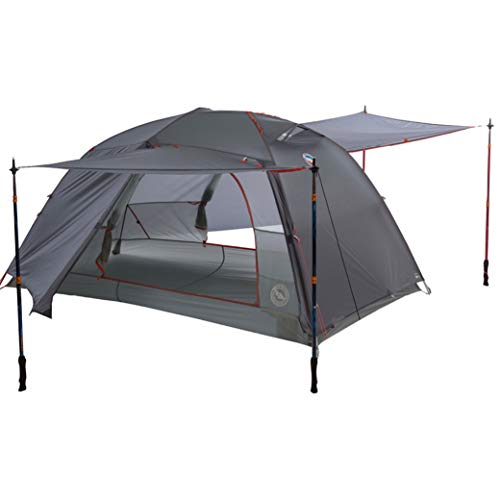
- THE BIKE-PACKERS DREAM – Single-track, two-track, and roadie riders rejoice; our two-door, two vestibule Copper Spur HV UL Bike…
- TRAIL READY – Don’t hesitate to get dirty; This burly compression stuff sack is designed to withstand all the rigors of trail t…
- ULTRALIGHT STRENGTH – 4-way, high-volume hub design increases strength by 25% and the useable interior volume by 20% compared t…
The most established name on this list, the Copper Spur UL2’s latest update keeps it genuinely competitive on weight and livability against newer entrants rather than resting on reputation alone. For a first serious ultralight tent purchase, its combination of a reliable freestanding pitch, real interior space for two, and a large enough dealer and review base to trust the buying decision makes it the safest starting point.
Best for More Interior Space: NEMO Dragonfly OSMO
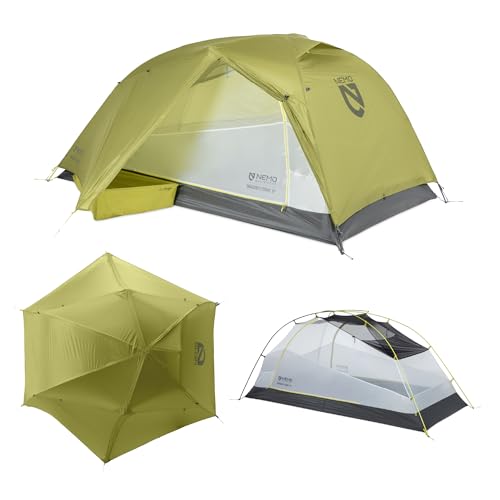
- High-performance, high-strength OSMO poly-nylon ripstop fabric has 5x longer-lasting water repellency and 3x less stretch when…
- Tall doorways with Gatekeeper tiebacks and vestibules on each side provide ease of entry and storage access.
- Hubbed, pre-bent DIAPOLE recycled aluminum poles include a Precurve cross pole that increases volume at the head by 34% while a…
The structural update to the Dragonfly’s pole and spreader bar system directly addresses the tight-interior complaint that dogged the previous generation, and the OSMO fabric NEMO uses resists water absorption better than older tent fabrics, meaning less weight gain when the tent is packed away wet. For backpackers who found older ultralight tents claustrophobic, this is the pick that trades a small amount of weight for real, noticeable extra room.
Best Value New Release: Durston X-Dome 2
Availability and specific models shift often enough that we’re pointing you to live search results rather than a single listing that could be discontinued.
Launched this year as a genuinely new freestanding option, the X-Dome 2 undercuts most established competitors on price while offering more usable interior space — a rare combination in a category where price and weight usually move together. It’s a strong pick specifically for backpackers who want a freestanding pitch without paying the premium established brand names in this category typically command.
Best Trekking-Pole Shelter: Durston X-Mid 2
Availability and specific models shift often enough that we’re pointing you to live search results rather than a single listing that could be discontinued.
This year’s fly zipper and floor fabric updates address the durability complaints that were the X-Mid 2’s main knock in earlier reviews, while keeping the design’s genuinely excellent weight-to-space ratio intact. For backpackers already carrying trekking poles and comfortable with the more deliberate staking a non-freestanding shelter requires, it remains one of the lightest ways to get real two-person interior space.
Best Premium Pick: Hyperlite Mountain Gear CrossPeak 2
Availability and specific models shift often enough that we’re pointing you to live search results rather than a single listing that could be discontinued.
At the top of this list on both weight savings and price, the CrossPeak 2 uses Dyneema composite fabric to hit a weight class most freestanding tents can’t touch, without giving up the freestanding pitch’s reliability on difficult ground. It’s a genuinely premium purchase, and the right one specifically for backpackers who’ve already dialed in the rest of their kit and are chasing the last real pounds out of a pack for serious mileage trips.
Managing Interior Condensation
Condensation is less a tent flaw than a physics reality — warm, moist breath and body heat inside a tent meets a cooler outer fabric surface overnight, and water condenses out of the air onto whatever surface is coldest, whether that’s a single-wall tent’s interior or a double-wall tent’s rainfly. Active ventilation, propping vents or doors open rather than sealing the tent fully even on a cool night, reduces condensation buildup meaningfully by letting moist air escape rather than accumulate against cold fabric. Pitching in a spot with some airflow rather than a sheltered, still hollow also helps, since stagnant air around a tent worsens condensation compared to a site with at least gentle air movement. Wiping down interior walls with a small packable cloth before packing the tent away in the morning, rather than stuffing a damp tent straight into its sack, prevents that trapped moisture from developing mildew or a lingering odor by the next trip.
Vestibule Space: The Feature Spec Sheets Undersell
A tent’s vestibule — the covered but non-floored area between the inner tent door and the outer fly — matters more to real trip comfort than most buyers weigh it against interior floor space, since it’s where wet boots, a pack, and cooking gear live overnight without taking up sleeping space or tracking mud into the inner tent. Trekking-pole shelters and some ultralight freestanding designs trim vestibule size aggressively to save weight, which is a reasonable tradeoff on a fast-and-light trip but a genuine frustration on a multi-day trip in wet weather where gear needs somewhere dry to sit besides directly next to your sleeping bag. Check actual vestibule square footage, not just total tent weight, when comparing models seriously — two tents with similar overall weight can differ meaningfully in how livable they feel once you’re actually sitting out a rainy evening rather than just sleeping in clear weather.
Footprint and Ground Protection: A Small Add-On That Extends Tent Life
A dedicated footprint — a thin, tent-shaped ground sheet sized to sit under the tent floor — adds a small amount of weight in exchange for real protection against abrasion, punctures, and moisture wicking up from wet ground, all of which are harder on an ultralight tent’s thin floor fabric than on a heavier car-camping tent’s floor. Most ultralight tent makers sell a matched footprint as an accessory rather than including one standard, which is worth budgeting for separately since it directly protects the most expensive part of the setup from the ground-level damage that’s hardest to see coming and most expensive to repair afterward. A generic tarp or painter’s plastic sheet works as a budget substitute, though it needs to be trimmed slightly smaller than the tent floor to avoid channeling rain underneath rather than away from it.
Seasonality Rating: Why a 3-Season Tent Isn’t a Winter Tent
Every tent on this list is a 3-season design, built to handle rain, wind, and cool temperatures but not the sustained snow load and structural demands of true winter camping. A 3-season tent’s mesh panels, lighter pole structure, and fabric choices are optimized for weight savings that assume snow accumulation isn’t a design requirement, and using one for genuine winter camping risks pole failure under snow load or condensation problems the ventilation wasn’t designed to handle. For late-season Alberta hunts or shoulder-season trips where an unexpected snowfall is a real possibility, check a specific tent’s actual rated conditions rather than assuming any freestanding design handles snow load safely, and be prepared to actively clear accumulated snow off the fly overnight if conditions turn colder than planned.
Staking and Guying: Don’t Skip It Because the Tent Is Freestanding
“Freestanding” means a tent holds its shape without stakes, not that it performs well unstaked in real wind — every tent on this list, freestanding or not, needs to be staked and often guyed out to perform as designed once weather turns, and skipping that step because the tent technically stands up on its own is a common mistake that shows up the first time a gust comes through camp. Budget for a few extra stakes beyond what ships with the tent; the included set is often a bare minimum, and soft or sandy ground common in some Alberta camping areas benefits from wider or longer stakes than the standard set provides.
Which One to Actually Buy
For most backpackers buying their first serious ultralight tent, the Big Agnes Copper Spur UL2 remains the safe, proven default. Buyers who found older ultralight tents too tight for two people should look at the updated NEMO Dragonfly OSMO instead. The Durston X-Dome 2 is this year’s best value story — a genuinely new option beating established competitors on both price and space. Backpackers already using trekking poles and comfortable with a more careful pitch get real weight savings from the X-Mid 2. And if budget genuinely isn’t the constraint and shaving every possible ounce is, the CrossPeak 2 is where this category currently tops out.
Backcountry access, Crown land camping, and public land use rules can change seasonally. Confirm current requirements at alberta.ca before you head out.
Related Auburn AI Products
Running an affiliate content site and want to scale? Auburn AI has kits for operators: