
AI-narrated version of this post using a synthetic voice. Great for accessibility or listening while busy.
Affiliate disclosure: PickinRocket participates in the Amazon Services LLC Associates Program. As an Amazon Associate we earn from qualifying purchases. Prices and availability are accurate at publish time but may change.
Standard foam life jackets work. They also sit bulky under a jacket, dig into your arms while casting all day, and end up left in the boat “for later” often enough that they’re not doing anyone any good. An inflatable PFD solves the comfort problem that keeps a lot of anglers from actually wearing a life jacket while fishing, which matters because a PFD only works if it’s on you when something goes wrong, not stowed under a seat.
The Real Problem Inflatables Solve
Drowning statistics involving boats consistently point to the same pattern: the PFD was on board, not on the person. Comfort is the biggest reason people skip wearing one, especially anglers who need full arm mobility to cast repeatedly through a long day on the water. An inflatable PFD, worn as a low-profile belt pack or slim vest, removes most of that friction – it doesn’t restrict casting motion, doesn’t trap heat the way foam does on a warm day, and is light enough that most anglers genuinely forget they’re wearing it. That’s the entire value proposition: not a better PFD on paper, but one people actually keep on instead of stowing.
Who Should Buy One, and Who Should Stick With Foam
Inflatables aren’t the right choice for everyone. They typically aren’t rated for personal watercraft use, are less suited to whitewater or fast-moving rivers where a CO2 cartridge malfunction or delayed inflation is a real risk, and require regular maintenance – checking the CO2 cartridge and rearm kit – that a foam vest never needs. Kids’ PFDs should remain standard foam models, full stop; inflatables aren’t approved for children in most cases. For an adult angler on calm-to-moderate lake or slow-river water who currently skips wearing a PFD because the foam version is uncomfortable, an inflatable is very likely worth it specifically because it solves that exact problem.
Comparison: PFD Types for Alberta Anglers
| Type | Price range | Comfort | Best for | Limitation |
|---|---|---|---|---|
| Standard foam vest | $30-$80 | Bulky, warm | Kids, whitewater, PWC use, budget | Least comfortable for all-day wear |
| Manual inflatable belt pack | $70-$130 | Very low-profile | Calm lake/river fishing, all-day comfort | Requires manually pulling to inflate |
| Automatic inflatable vest | $120-$200 | Low-profile, worn like suspenders | Solo anglers, added safety margin | Higher cost, needs cartridge maintenance |
| Hybrid foam/inflatable | $80-$150 | Moderate | General boating with some inflate assist | Bulkier than pure inflatable, less than full foam |
Maintenance Isn’t Optional With an Inflatable
An inflatable PFD only works if its CO2 cartridge is properly seated and its firing mechanism hasn’t been triggered or corroded since the last check. Most manufacturers recommend inspecting the cartridge, indicator window, and rearm kit at the start of every season at minimum, more often with regular use, and replacing the cartridge immediately after any inflation, intentional or accidental. This is genuinely more upkeep than a foam vest requires, and skipping it defeats the entire purpose of owning one – an inflatable that fails to inflate when needed is worse than a foam vest you actually wore.
Alberta Water Temperatures Change the Calculation
Cold water immersion is a serious risk on Alberta lakes even in summer, since many sit at elevation or stay cold well into the season from spring runoff. A PFD’s job is to keep you afloat while cold shock and reduced muscle function make swimming difficult or impossible, exactly the scenario where a PFD that’s actually being worn matters most, and exactly the scenario where “I’ll put it on if it gets rough” doesn’t work – cold shock happens on unexpected entry into the water, not after a considered decision.
How Inflatables Are Tested and Certified
Any inflatable PFD sold as a real safety device should carry Coast Guard approval (USCG in North American products, the standard reference point used across the industry including in Canada), meaning it’s been tested for buoyancy, inflation reliability, and material durability under standardized conditions. This isn’t a marketing detail to skip past – an uncertified inflatable-style product marketed as a “swim aid” or “buoyancy assist” rather than a certified PFD may not meet the performance a real emergency requires, and shouldn’t be substituted for a properly rated life jacket regardless of how similar it looks.
What to Do If You Fall In While Wearing One
A manual inflatable requires pulling the inflation handle promptly after entering the water – the muscle memory for this is worth building on dry land before you ever need it for real, since cold-water shock can make fine motor tasks harder than expected in the first thirty seconds of immersion. An automatic model inflates on water contact without any action required, which is exactly the scenario it’s designed for. Either way, once inflated, get your breathing under control first – cold shock causes involuntary gasping that’s dangerous if it happens underwater – then orient yourself and swim or signal for help. This is the entire reason comfort matters enough to justify an inflatable’s added cost: none of it works if the PFD wasn’t being worn in the first place.
Best Budget/Standard Pick: Foam Fishing Vest
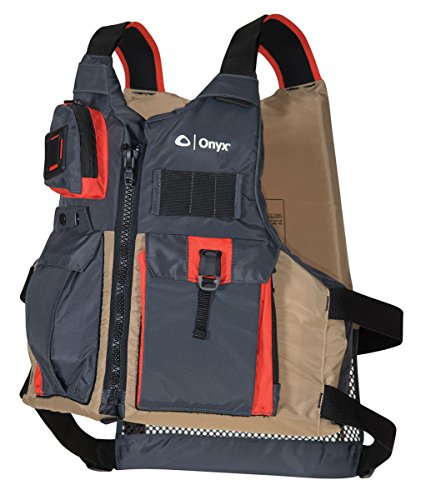
- Designed for Anglers – Multiple pockets and tool holders keep fishing gear within easy reach
- Ultimate Comfort – High-back design works with kayak seats, while adjustable straps ensure a perfect fit
- Maximum Safety – U.S. Coast Guard Approved PFD provides reliable flotation for fishing and paddling
A well-designed foam fishing vest with fishing-specific features – rod holder loops, tool pockets, a lower-profile cut than a generic boating vest – closes some of the comfort gap with inflatables while staying at a lower price point and requiring zero maintenance. It’s the right call for whitewater, personal watercraft use, or anyone who wants a PFD that needs no upkeep and works regardless of a mechanical failure.
Best All-Around: Manual Inflatable Belt Pack

- U.S. COAST GUARD APPROVED: This USCG-approved inflatable belt pack inflates manually by pulling the inflation handle. Approved…
- MANUAL INFLATION: The 16 gram CO2 charge provides 17 pounds of buoyancy. This belt pack is equipped with back-up oral inflation…
- SAFETY & SECURITY: The inflation handle clips to the life jacket to prevent snag hazards. The adjustable body belt and front bu…
Worn like a small fanny pack until needed, a manual inflatable is the least intrusive option for casting all day, and it’s a strong fit for calm lake or slow-river fishing where the greater risk is simply not wearing a PFD at all rather than the specific inflation mechanism. It requires a conscious pull to inflate, a real consideration if you might be unconscious or incapacitated when you go in the water – worth thinking through honestly for your specific situation.
Best for Solo Anglers: Automatic Inflatable Vest

- U.S. COAST GUARD APPROVED: This USCG-approved Inflatable Life Jacket inflates automatically upon water immersion or manually pu…
- HIGHLY BUOYANT: Provides 22.5 pounds of buoyancy when fully inflated, keeping you safe and afloat. Its buoyant material offers…
- MANUAL INFLATION OPTION: Easily converts to MANUAL ONLY inflation mode when paddling, fly-fishing, or other activities where th…
For anglers fishing alone, an automatic inflatable that triggers on water contact removes the risk of a manual pull not happening if you’re injured, disoriented, or unconscious when you go in. It costs more and needs the same cartridge and rearm-kit maintenance as a manual model, but for solo fishing trips specifically, the added safety margin is a genuinely meaningful upgrade over a manual pull design.
The Middle Ground: Hybrid Foam/Inflatable
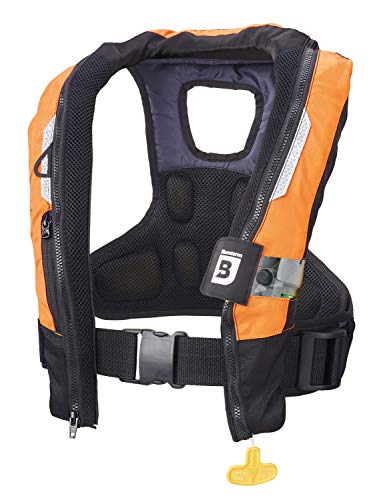
- US COAST GUARD-APPROVED TYPE II PERSONAL FLOTATION DEVICE (PFD): This type 2 life jacket is designed to turn the wearer face-up…
- LIGHTWEIGHT, COOL AND COMFORTABLE: The life vest’s wide neck opening and ergonomic chassis shape hugs the body where needed to…
- SAFE AND SECURE: Bluestorm Gear’s quick burst zipper technology keeps the life jacket secure during heavy fishing, boating, sai…
A hybrid vest combines a slimmer foam layer with inflatable assist, landing between a full foam vest and a pure inflatable on both comfort and reliability. It’s a reasonable choice for general boating that isn’t specifically all-day fishing, where the extra buoyancy assurance of some built-in foam is worth a bit more bulk than a pure inflatable.
Fit and Sizing: Chest Size, Not Body Weight, Is What Matters
PFDs, inflatable or foam, are sized by chest measurement, not body weight or the shirt size you’d normally buy – a mismatch here is one of the most common reasons people end up with a PFD that rides up, chafes, or simply doesn’t get worn because it’s uncomfortable in a way that has nothing to do with the inflatable-versus-foam decision at all. Measure around the fullest part of your chest before ordering rather than guessing from a general size chart based on height and weight, and check the specific manufacturer’s sizing table since it varies more between brands than most buyers expect. A properly fitted inflatable belt pack or vest should sit snugly without restricting breathing or arm movement for casting – if it’s loose enough to shift around under normal movement, it’s the wrong size regardless of how good the specific model is.
The Honest Verdict
For adult anglers who currently own a foam PFD and don’t wear it because it’s uncomfortable for all-day casting, an inflatable is worth it – not because it’s objectively a better PFD, but because it’s one you’ll actually keep on, and a PFD that’s worn is infinitely more useful than a better one sitting under a seat. Solo anglers should lean toward an automatic model for the added margin; anglers who mostly fish with a partner and are comfortable with a manual pull can save some money with a manual belt pack. Kids, whitewater paddlers, and personal watercraft users should stick with standard foam – inflatables aren’t the right tool for those situations regardless of comfort. And regardless of which type you land on, the honest bottom line is the same across this entire category: the best PFD is whichever one you’ll actually keep on for the whole trip, not the one with the best spec sheet sitting unused under a seat.
Boating and watercraft regulations, PFD requirements, and access rules vary by waterbody and can change. Confirm current rules at alberta.ca/fishing before you head out.
Related Auburn AI Products
Running an affiliate content site and want to scale? Auburn AI has kits for operators: